Showing posts with label History. Show all posts

Thursday, 22 March 2018

On the Objectives Resolution

The creation of Pakistan was a culmination of the ‘Indian Muslim National Project’ that was started by Muslim Elites primarily based in UP. It was bound to be a country where religion took center stage in the political arena. Led by a charismatic, populist British lawyer, All India Muslim League was a hotchpotch of landed gentry and titled aristocracy. The Second World War paved the way for an early exit by the British and handed a historic chance to Indian leaders to decide their destiny. It is difficult to predict if a ‘United India’ would have survived for some time in the absence of British interlocutors since fratricide and ethnic cleansing in Potohar had started much before the actual partition. The Muslim Elite (Ashraf) that founded Pakistan decided that the country would be an ideological state, the ideology was chosen to be Islam. Not because the elite overwhelmingly consisted of Islamists (with a few exceptions) but because religion is an easy way to manipulate people. The Khilafat movement had provided a glimpse of what mixing religion and politics could achieve and Muslim Leaguers were well-aware of its power, which is why they used the ‘Islam in Danger’ card during the 1945 election.

Objectives Resolution was the foundation on which this building was to be erected. It was presented a few months after Mr. Jinnah had passed away so minimal opposition was expected. It was the first effort of its kind among the newly established Muslim-majority nation states. One could argue that even if the Objectives Resolution was not passed when it was, situation in Pakistan would have been similar to what it is today. I completely agree with this sentiment but now that we have a starting point, we should examine what happened there and if it would have been possible somewhere along the line to course-correct. There are more reasons than one to explain Pakistani society’s ‘right-ward’ turn including Islamisation from the top, financial requirements (we always needed Dollars or Riyals in absence of a proper industrial base) and opposition to a ‘Hindu’ India. One factor that is implored much less is what I call ‘de-novo Islamisation’, i.e. Islamisation from below, by Islamic organizations in different guises. Outside of big cities such as Karachi, Pakistanis were always religious and conservative. It didn’t occur with Zia and Objectives Resolution before him. I fail to explain why ‘modernization’ has only been tried under military dictators while most politicians (despite being secular in private) turned religious in public, once they were in power. Anyhow, I wanted to plug a two-part commentary I wrote on the proceedings of Constituent Assembly following the presentation of Objectives Resolution by Prime Minister Liaqat Ali Khan.

The creation of Pakistan was a culmination of the ‘Indian Muslim National Project’ that was started by Muslim Elites primarily based in UP. It was bound to be a country where religion took center stage in the political arena. Led by a charismatic, populist British lawyer, All India Muslim League was a hotchpotch of landed gentry and titled aristocracy. The Second World War paved the way for an early exit by the British and handed a historic chance to Indian leaders to decide their destiny. It is difficult to predict if a ‘United India’ would have survived for some time in the absence of British interlocutors since fratricide and ethnic cleansing in Potohar had started much before the actual partition. The Muslim Elite (Ashraf) that founded Pakistan decided that the country would be an ideological state, the ideology was chosen to be Islam. Not because the elite overwhelmingly consisted of Islamists (with a few exceptions) but because religion is an easy way to manipulate people. The Khilafat movement had provided a glimpse of what mixing religion and politics could achieve and Muslim Leaguers were well-aware of its power, which is why they used the ‘Islam in Danger’ card during the 1945 election.
Objectives Resolution was the foundation on which this building was to be erected. It was presented a few months after Mr. Jinnah had passed away so minimal opposition was expected. It was the first effort of its kind among the newly established Muslim-majority nation states. One could argue that even if the Objectives Resolution was not passed when it was, situation in Pakistan would have been similar to what it is today. I completely agree with this sentiment but now that we have a starting point, we should examine what happened there and if it would have been possible somewhere along the line to course-correct. There are more reasons than one to explain Pakistani society’s ‘right-ward’ turn including Islamisation from the top, financial requirements (we always needed Dollars or Riyals in absence of a proper industrial base) and opposition to a ‘Hindu’ India. One factor that is implored much less is what I call ‘de-novo Islamisation’, i.e. Islamisation from below, by Islamic organizations in different guises. Outside of big cities such as Karachi, Pakistanis were always religious and conservative. It didn’t occur with Zia and Objectives Resolution before him. I fail to explain why ‘modernization’ has only been tried under military dictators while most politicians (despite being secular in private) turned religious in public, once they were in power. Anyhow, I wanted to plug a two-part commentary I wrote on the proceedings of Constituent Assembly following the presentation of Objectives Resolution by Prime Minister Liaqat Ali Khan.
Objectives resolution, Part 1: http://dailytimes.com.pk/opinion/03-Jul-17/objectives-resolution-i

Excerpts in Italics..
In this milieu, Objectives Resolution was a pioneering effort to define and crystallise Muslim Nationalism and an effort to ‘Islamise’ the society. This effort naturally faced opposition from members of the assembly who didn’t belong to the Muslim faith and were not enthused by the wording of this resolution. The debates that took place foreshadowed discussions about the Islamist-secular dichotomy as well as the status of minorities in a Muslim-majority society and role of religion in a society that had barely recovered from the shock of a violent partition based on religious affinity.

Objectives Resolution, Part 2: http://dailytimes.com.pk/opinion/06-Jul-17/objectives-resolution-ii

Following is a concise account of the reaction that the Resolution garnered among members of the Assembly.

Bhupendra Kumar Datta said that if this Resolution is approved, it will open the door to political adventurers such as Yuan Shikai (Chinese General who attempted restoration of monarchy while crowning himself the Emperor) or Bacha Sakka (Habibullah Kalakani, an Afghan warrior who briefly became the King).
He warned against the deification of the state, citing Nazi Germany as an example. He delineated the core problem of mixing religion and politics as: “All our religious scriptures are subject to different interpretations by different theologians and divines. It, therefore, becomes a difficult matter when you speak of those ‘limits’ prescribed by the Almighty.”
Prem Hari Barma said: “The Objectives Resolution is not meant only for Muslims but it is intended for non-Muslims of Pakistan also. If the Honourable Mover has in his mind any limitations stated in the Holy Quran or any other scripture of Islam, then those limitations are known to Muslims only”.
Kamini Kumar Datta said: “Though supreme sovereignty rests in God, God doesn’t rule directly. The people have to exercise the right of sovereignty through its chosen representatives.” He demanded an explanation of the concept of Zimmis and the status of minorities in Pakistan.
Other members of the assembly suggested different amendments to the Resolution. Dr Ishtiaq Husain Qureshi, Pakistan’s first Education Minister, defended the Resolution. He rejected the theory that faith and politics belong to different spheres of life.
Maulana Shabbir Ahmed Usmani, a cleric with a dubious past, said in his speech: “It should not dismay us if we are branded as conservatives and reactionaries. We should try to unravel the tangled skein in the spirit of a seeker after truth”.
He went on to proclaim that “the Islamic state was the first political institution in the world which abolished imperialism and installed a caliph elected by the people in place of a king”.
He further elaborated upon his idea of an Islamic state as “a state which is run on the exalted and excellent principles of Islam. People who do not subscribe to those ideas may have a place in the administrative machinery of the state but they cannot be entrusted with the responsibility of framing the general policy of the state or dealing with matters vital to its safety and integrity”.
..
The penultimate speech was delivered by leader of the opposition, Sri Chandra Chattopadhyaya, who warned the ruling party in no uncertain terms what the future held for the country if the Resolution was passed without amendments.
His advice fell on deaf ears and all amendments were rejected by the Assembly. Pakistan officially took its first step towards becoming an ‘Islamic state’ on 12th March, 1949. The rest is history.

Thoughts welcome!

Story of Communism in Pakistan

Yeh fasal umeedon ki hamdam,
Iss baar bhi ghaarat jaye gi,
Sab mehnat subhon shaamon ki,
Ab kay bhi akaarat jaye gi
(This crop of aspirations
will be ruined once again,
the toil of day and night
will be wasted another time.)
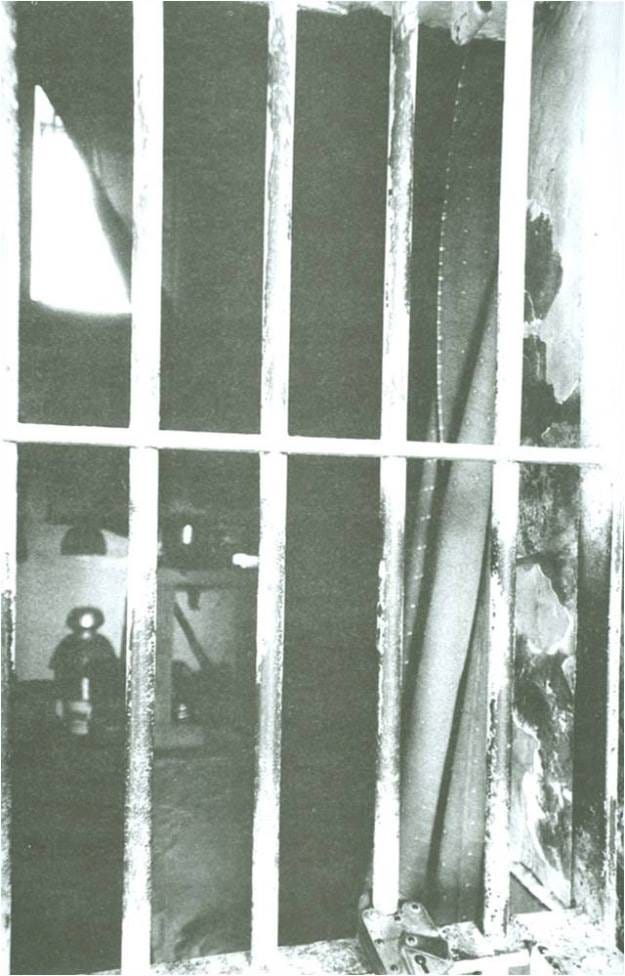
(Faiz, Montgomery Jail, 1955)
The view from jail
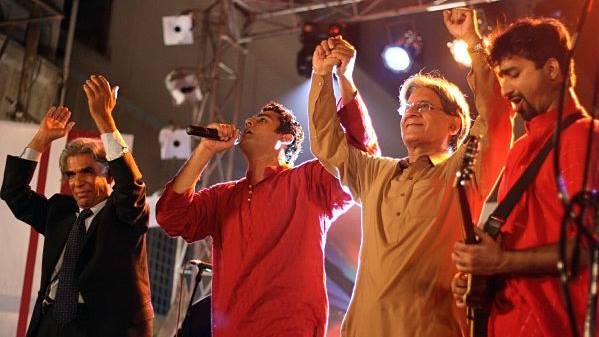
The year 2007 was eventful in Pakistan’s recent history. Political upheaval coupled with a rise in terrorism and a lawyers’ movement for the restoration of the judiciary gripped the country for most of the year. Musharraf, the military dictator, had forcibly removed the Chief Justice of Pakistan — sparking a movement led by lawyers across the country. Amidst all this kerfuffle arose a new band called ‘Laal’ with their song ‘Umeed e Seher’ (Hope for a new Dawn). The song became a sort of anthem for the lawyers’ movement alongside slogans against military dictatorship. The song was based on a poem written by Pakistan’s foremost progressive poet Faiz Ahmed Faiz and the band consisted of young academics who openly declared themselves Marxists. One of the band members was the General Secretary of a Communist Party in Pakistan. A communist party in Pakistan? That seems like an oxymoron, does it not?
Laal performs in Karachi, Pakistan. Lead singer Shahram Azhar and guitarist Taimur Rahman take a curtain call with key leaders of Pakistan’s lawyers’ movement, Ali Ahmed Kurd (left) and Aitzaz Ahsan. (Source: Nighat Chaudhry/for NPR)
Today, the international media has no space for stories that contradict the dominant narrative of Pakistan as a fountainhead of extremism. In order to understand the current trajectory of Pakistan, it is imperative to discover the alternative discourse that existed in the days gone by. While it is an established fact that the All India Muslim League played a pivotal role in the movement that led to the 1947 Partition of India, the contributions of the Communist Party of India are often neglected in this regard. The Communist Party of India (CPI) was established in the third decade of the twentieth century. Initially, the CPI aligned itself with the progressive section within the Indian National Congress consisting of people such as Jawaharlal Nehru, Subhas Bose and Jayprakash Narayan. CPI adopted a ‘United Front’ tactic and sought positions within the structure of Congress. This relationship remained intact till the Second World War (WWII).
In 1942, the All India Congress Committee (AICC) met in Bombay and passed a resolution condemning the British involvement in the war. All communist members of AICC voted against the resolution because the Soviet Union had entered the war by that time. This was a momentary divorce between the two parties and CPI sought other allies in their anti-fascist stance against Germany. By that time, the Muslim League had decided to support the British government’s war effort and proposed the formation of ‘Pakistan’, consisting of the Muslim-majority areas in British India. The British government and the Muslim League were the unlikely ideological partners that the CPI decided to support. In 1942, the CPI held a meeting of its central committee during which G.M. Adhikari presented a resolution indirectly endorsing the idea of ‘Pakistan’. Adhikari viewed Muslim nationalism as a reflection of uneven development of the bourgeoisie amongst the Muslim masses in British India. In an article published in the CPI’s Urdu newspaper Qaumi Jang, Sajjad Zaheer (member of CPI’s central committee) praised the Muslim League faction in Sindh for pursuing progressive politics.
The Muslim League never enjoyed electoral success in the province of Punjab before Partition and the Muslim-majority province voted overwhelmingly in favour of the Unionist Party that ruled the province during the years 1936–1946. Before the 1946 elections, the CPI asked Muslim communists based in Punjab (including Mian Iftikharuddin, Daniyal Latifi and Abdullah Malik) to support the Muslim League in their electoral efforts. There was, however, a reversal in the CPI’s support to the Muslim League in later part of 1946, due to a change in the Soviet attitude towards such ‘liberation’. Sajjad Zaheer then wrote an article criticising the Muslim League’s strong-arm tactics such as the call for ‘Direct Action Day’. During the Partition of India in 1947, the CPI failed to have any significant impact on the larger political stage and the ensuing violence.
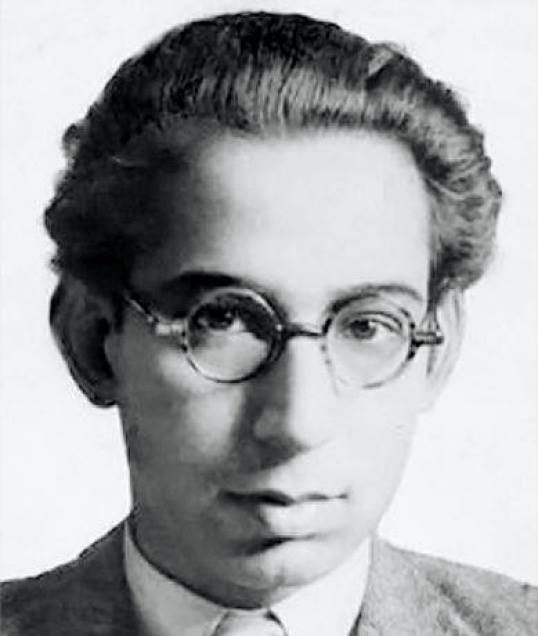
Sajjad Zaheer
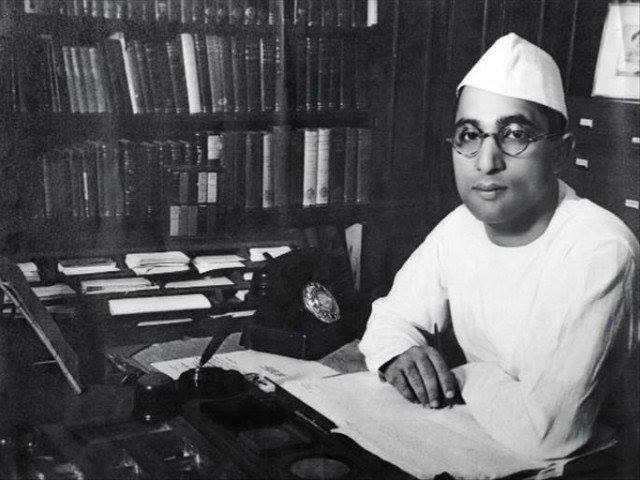
Mian Iftikharuddin
Daniyal Latifi
Abdullah Malik
Faiz Ahmad Faiz with jailmate Sajjad Zaheer
Ye daag daag ujaalaa, Ye shab gaziidaa sahar
Wo Intazaar thaa jiskaa, Ye wo sahar to nahi(n)
Ye wo sahar to nahii Jiskii aarazuu le kar
Chale the Yaar kay mil jaaye gi kahi(n) na kahi(n)
(This blood stained light, this dark-stained dawn,
this is not the destiny we were waiting for.
This is not the Destination towards which
we travelled in hope and anticipation.)
Faiz, “Subhe Azadi”, August 1947.
In the year 1932, Urdu’s literary landscape was jolted by the publication of a collection of short stories aptly titled ‘Angaaray’ (Embers). The topics covered in the stories included gender, sexuality, women’s rights and a critique of religion alongside traditional Indian customs. The publication of this book divided the Urdu literati in two camps. On one side were the naturalists or people who favoured “Art for art’s sake” while the other side believed in “Art for humanity’s sake”. The second group, composed mainly of Marxist Indian students and aspiring writers, formed the All India Progressive Writers Association. Their manifesto was first published in February 1935 in Left Review and the Hindi translation in October 1935. From its inception, the movement had a core group of committed communists but its larger membership was not limited by political ideology. Writers and poets focusing on the miseries of the proletariat and mocking the bourgeoisie and ruling classes joined the movement during that period. The movement was not an offshoot of the CPI but worked closely with the communist party.
Sajjad Zaheer was one of the Indian students at Oxford who became a founding member of the Progressive Writers Movement. He described the movement in the following words: “We can only call that literature successful, that knowledge true knowledge, that art real art, which benefits the tree of humanity, which soldiers against capitalist violence and oppression and is a blessing for the working class.”
After the Partition of India, progressive writers who were based in areas that became Pakistan and those who migrated from India formed the All Pakistan Progressive Writers Association. There was no official presence of the CPI in Pakistan but APPWA worked as a cultural representative of left-wing politics in Pakistan. A new manifesto for writers was issued by the CPI which declared that all writers had to take sides in this new battlefield between the people and the ruling elite; neutrality was not an option. In the post-Partition era, debates about the future of Pakistan were going on in political and cultural spheres.To quote Saadia Toor, “one of the most pitched political/ideological battles of the post-independence period was conducted between two literary camps — the left-wing members of Progressive Writers Association and their liberal anti-communist detractors.”
The liberal writers considered themselves first and foremost as patriots who were committed to putting their energies and talents in service of their new nation-state. They defined this project of nation-building as being incompatible with the socialism and anti-imperialism of Progressives. The Progressives went on the offensive and boycotted writers who deviated even slightly from ‘party policy’. This led to them ostracizing luminaries such as Manto and Noon Meem Rashid. These writers were denied any space in the magazines and newspapers controlled by Progressives. In a 1984 interview, Faiz Ahmad Faiz decried the ‘extremism’ that had gripped the PWA in the early post-Partition years. Faiz was never formally a part of the PWA or Communist Party.
Manto wrote a scathing critique of the Progressive Writers Association and its admirers in one of his essays titled “Jayb-e-Kafan”. He wrote, “What kind of progressives are they, when all they advocate is regressive. Why does their ‘redness’ point towards darkness? How can they be friend of the proletariat when they urge working classes to demand their due rights before starting work? I can’t seem to fathom their innovations through which they want to turn the Ghazal into a machine and a machine into Ghazal. I was fed up of their ever increasing manifestos, their lengthy resolutions. Most of their statements arrived from Kremlin through Mumbai and reached McLeod Road (in Lahore). All they care is what this Russian writer wrote or what that Russian intellectual prophesized. I was frustrated on realizing that these people don’t talk about the land we inhabit. If we have stopped producing intellectuals, is becoming a ‘Red’ the only antidote to this malady?”
Wo Baat Saray Fasanay Main Jiska Zikr Na tha
Wo baat unhain bohat Na-gawar guzri hai.
(The issue that was not even mentioned in the story
has bothered them the most).
(Faiz, 1951)
In the second post-Partition CPI congress held in Calcutta, three people represented West Pakistan and 32 people represented East Bengal (later named East Pakistan). After the main congress, the Pakistani delegates convened and held the first meeting of a ‘Communist Party of Pakistan’. Sajjad Zaheer was chosen as the General Secretary. Sajjad Zaheer and two other people migrated to Pakistan to run the day-to-day affairs of the new party. After independence, only 1% of Pakistan’s population was working in industry and among those, only 25% were unionized. Apart from engaging in debates about the future direction of Pakistan via the Progressive Writers, the Communist Party of Pakistan motivated labourers to unionize. By 1950, almost 150 unions had been created in East and West Pakistan. Under the party’s tutelage, a Civil Liberties Union, a Peace Committee, a Women’s Democratic Union and a Democratic Youth League were also formed.
Among students, left-leaning students had formed the Democratic Students Federation (DSF) in Karachi and Rawalpindi. While the party didn’t gain enough mass appeal, it focussed on particular areas to conserve its limited resources. Soon after Partition, Pakistan had sent irregular troops into Kashmir but the mission had been aborted after the Raja acceded to India. An adventurous veteran of the first Kashmir war, Major-General Akbar Khan, talked to some people — including the top brass of the Communist Party of Pakistan — about a possible plan to overthrow the government and attack Kashmir again. This foolhardy plan was unanimously rejected by the Communist Party of Pakistan.
But the matter was not to end there, given the Cold War environment.
Following the Second World War, the world was divided into Capitalist and Communist camps led by the United States and the Soviet Union respectively. After Partition, Pakistan was looking for a benefactor to aid its economy and armed forces. A witch hunt was taking place in the United States against communists in Hollywood and the intelligentsia through the House Un-American Activities Committee and Jospeh McCarthy. In an effort to ingratiate themselves with the Americans, Pakistani authorities (in full know of General Akbar’s plan) arrested the General, some other military officers, the top brass of the Communist Party of Pakistan and Faiz Ahmed Faiz. This case became famous as the ‘Rawalpindi Conspiracy Case’. All of the accused were sent to jail but were released after serving less than their sentence. In 1954, Pakistan finally signed a Mutual Defence Pact with the United States. The Communist Party of Pakistan was officially banned in the following month. The Democratic Students Federation was also banned.
Sajjad Zaheer left Pakistan after getting released from jail in 1955. In the absence of a communist leadership, many political activists from the party formed the National Awami Party (NAP) in the 1950s. Students formerly in the DSF joined a new student organization called the National Students Federation (NSF). NAP consisted of political heavyweights from East and West Pakistan. The party opposed Ayub Khan’s martial law in 1958 and supported opposition candidate Fatima Jinnah in the presidential elections held in 1965. After leaving Ayub’s cabinet in the aftermath of the Taskent Agreement with India and before forming his own party, Zulfikar Ali Bhutto wanted to join NAP. Mr. Bhutto was deterred by the fact that the party was not willing to accept him as a ‘leader’ without first coming through the party’s ranks.
NAP split into pro-Moscow and pro-Beijing factions in 1965. The pro-Beijing faction further split and Major Ishaq alongside Afzal Bangash formed the Mazdoor Kissan Party (MKP) — a party of Maoist leanings that fought against entrenched landlordism in Hashtnagar, which is part of today’s Khyber-Pakhtunkhwa province. Many left-wing ideologues, meanwhile, also joined the Pakistan Peoples Party (PPP) founded by Mr. Bhutto and were a vital part of the party. In the 1970s, Pakistan needed benefactors beyond the United States and Mr. Bhutto started envisioning himself as the leader of the ‘Islamic world’. Left-wing ideologues in the PPP were tortured, jailed and abandoned as a result of this paradigm shift. The Progressive Writers Movement failed to have much impact on the literary scene beyond the initial years and wilted completely during the oppressive Islamisation under Zia’s dictatorship. Women’s rights organizations that started in the 1970s consisted of women with mostly left-wing worldviews. The only mainstream left-wing party working in Pakistan is the Awami Workers Party, a coalition of three leftist parties.The Lawyers’ Movement was hijacked in the later stages by right-wing parties and the Chief Justice was only restored after intervention of the military establishment.
The demise of Pakistan’s left has been blamed on many factors, including but not limited to the lack of an industrial base in the country. A former member of the party joked that when the Communist Party didn’t find industrial workers, they started recruiting railway workers (who were government employees). Another frequent criticism is the lack of adaptability shown towards local conditions and political economy while preaching ‘class war’ to people. Despite all these factors, there is still political space for progressive parties with workable ideas. After all, as Faiz would have reminded us, this stained dawn is not what we were waiting for!

Thursday, 14 August 2014

Trouble in Mesopotamia

Thoughts on the rise of ISIS(Islamic State of Iraq and Syria) and the possible reasons for this upheaval according to history.

(Originally published in The Nation on 23rd June, 2014)

The looming threat of civil war in Iraq can be traced back to at least three different historical events. The Islamic State of Iraq and Sham (ISIS) surprised most observers by seizing control of cities and towns in Western and Northern Iraq in the last few days. Using the northern part of Syria as a springboard and training ground, ISIS attacked Iraq’s second largest city-Mosul-and Saddam Hussain’s hometown, Tikrit. Iraq’s national army did not defend the cities and two divisions of the force (almost 30,000 men) simply turned and ran in the face of the assault. In December 2013, parts of Fallujah and Ramadi (in the Anbar province) were overtaken by the ragtag army made up of militants from around the world; an “Islamist” legion of sorts.

The first fault line of this conflict was drawn more than fourteen hundred years ago in the Arabian Peninsula. The conflict that arose after the death of the Prophet Muhammad regarding the right to succession as Caliph blew out into a schism that continues to this day. Sunnis believe that Abu Bakar, the senior most companion of the Prophet was rightly chosen as Caliph while Shias are of the view that Ali, the Prophet’s cousin and a member of his clan deserved the position. This internecine conflict has caused innumerable deaths whenever one group has gained ascendancy over the other. The Umayyad Caliphs were ‘Sunni’ and Shias suffered heavily under their reign. When the Abbasids (who claimed to be descendants of Abbas, Ali’s Uncle) rose to power, they unleashed a wave of terror towards the Umayyads. The last Umayyad caliph was tracked down to a church in Nile Delta, where his head was chopped off and his tongue was fed to a cat.

The animosity between the Umayyads and Abbasids was apparently political in nature but the underlying cause was sectarian. The second event that casts a shadow over the emergence of ISIS is the Sykes-Picot agreement that was signed during the First World War. It was a secret agreement signed between the governments of the United Kingdom and France, with the assent of Russia, defining their proposed spheres of influence and control in the Middle East should the Triple Entente succeed in defeating the Ottoman Empire in 1916. Mandates from the League of Nations gave France control of Syria and Lebanon. Britain held mandates over Palestine, Iraq, and the newly created Transjordan. In this way, new countries were created out of an existing monolith based on no particular parameters. There were no physical boundaries (like a river or mountains etc) between the new countries and arbitrary lines drawn in sand divided them. As a result, there are no well-defined, internationally recognized boundaries between countries in the Middle East till today (Iraq’s invasion of Kuwait in 1990 was based on the fact that the boundary between the two countries was never properly established).

The last piece of this puzzle is the American invasion of Iraq in 2003. Saddam Hussein was ruling only through sheer force, and not because he was immensely popular amongst the common people. His Ba’ath party favored the Sunni minority of Iraq and oppressed the Shia majority. Saddam’s regime targeted Shiite groups such as the ‘Dawa Party’, of which the current Iraqi Prime Minister, Nuri Al-Maliki was a member. His forces used chemical weapons against the Kurdish population during their reign of terror. But Iraq did not possess any weapons of mass destruction (WMDs), which was the raison d’être presented by the United States before launching their war. In February 2011, the defector who convinced the White House that Iraq had a secret biological weapons’ programme admitted that he lied about his story, as reported by The Guardian.

Following the war, American policymakers made huge tactical errors, which resulted in a Shia-Sunni armed conflict that is yet to be resolved. Gideon Rose, in his book “How Wars End: Why We Always Fight the Last Battle,” is of the view that, “wars actually have two equally important aspects. One is negative, or coercive; this is the part about fighting. The other is positive, and is all about politics. And this is the part that, as in Iraq, is usually overlooked or misunderstood.”

In the 2010 parliamentary elections in Iraq, a secular Iraqi leader named Ayad Allawi gained the majority of votes but he was not allowed to form the government due to a contentious court ruling. The Americans could intervene and point out how this contravened the Iraqi constitution but they hedged their bets by supporting Maliki, who spent most of his life as a violent Shia activist.

ISIS and its methods are so extreme that even Al-Qaeda distanced itself from the group. They were initially bankrolled by Sunni Arab states including Saudi Arabia. A recent news report mentioned that before capturing Mosul, ISIS’s total cash and assets were $875 Million. Afterwards, with the money they robbed from banks and the value of military supplies they looted, they could add another $1.5 billion to that. They recently released a series of photos titled “The Destruction of Sykes-Picot.”
Iraq’s neighbors, including Iran, Turkey and Syria are alarmed by the rise of ISIS and at least Iran and Turkey are contemplating the use of direct or indirect force to stall their advances. Turkey is supporting the Iraqi Kurds who seem to possess the only military force that has defeated militants and taken control over the vital city of Kirkuk. Iran’s clergy has called upon able-bodied men to take up arms and defend the holy sites of Shi’ism.

The most worrying aspect of this conflict is the potential for a Shia-Sunni civil war as ISIS fighters gain control over Sunni-dominant areas in Iraq; the Iraqi forces that deserted without fighting also had a lot of Sunni members. Sunni groups such as Majlis Thuwar Al Anbar, Jaish al-Mujahideen and Jaish Ansar al-Sunnah are providing tactical support to ISIS. It would seem that deep trouble now brews in Mesopotamia.

Thursday, 10 October 2013

Dr Abdus Salam-The Forgotten Son of Pakistan


On the eve of another Pakistani on the verge of a Nobel Prize,I am reproducing the biography of Dr Abdus Salam(the only other Pakistani to be awarded a Nobel, in 1979), as recounted by eminent historian, K.K Aziz in his book THE COFFEE HOUSE OF LAHORE, from page 200-209.
I hope Malala doesn't suffer the same fate.

   Dr. Abdus Salam

Salam was the son of Chaudhri Muhammad Husain, a schoolteacher of Jhang and Hajirah who belonged to Faizullah Chak near Batala. Muhammad Hussain was Jat and Hajirah a Kakkezai. Faizullah Chak was an almost exclusively Kakkezai Village. The Kakkezais were a close-knit community. Born in 1926 and educated at the Government High School and Government Intermediate College, Jhang, Government College, Lahore and St. John’s College, Cambridge, he made it a habit to excel in every examination he took. He stood first in 1940 in the matriculation of the Punjab University and again in 1942 in the F.Sc. Examination. He joined the Government College, Lahore in 1942 to study mathematics A and B and honours in English. He graduated in 1944 winning every laurel in sight: 300 out of 300 marks in Mathematics, 121 out of 150 in English Honours, standing first in the University and breaking all records in the B.A examination. In 1946, he took his M.A in Mathematics, scoring 573 marks out of 600, and topping the list.
In September 1946, he left for Cambridge on a Punjab Peasant Welfare Fund Scholarship to study Mathematics at St. John’s College as an undergraduate (Its worth mentioning here that this fact was recently mentioned in an article by Javed Chaudary, and the origin of the said fund was the money that was left over from the War tax, after the war had finished-AM). If in India, his academic career was brilliant, in Cambridge, it was dazzling. He got a first both in preliminary in 1947 and Part II in 1948, and then gave up Mathematics for the time being because on the higher level it could not be fully mastered without a good knowledge of physics. In an unprecedented performance, he read Physics for one year and took its Part I and II together in 1949; scoring a first and surprising even his teachers.
His scholarship was extended for two years (it should have been three years) to work for his Ph.D. He came to Pakistan in the summer, married Ummatul Hafeez, and returned to Cambridge in 1949, deciding to tackle theoretical Physics for his doctoral thesis.
The year 1951 was the time for him to harvest the fruits of his labour. He completed his thesis(though he could not get his PhD till the following year because the university statutes required that the candidate spent nine terms before being eligible to receive his doctorate), won the smith prize(From Wikipedia: The Smith's Prize was the name of each of two prizes awarded annually to two research students in theoretical Physics, mathematics and applied mathematics at the University of Cambridge,Cambridge, England-AM), was elected Fellow of his College, and named Fellow of the Institute of Advanced Studies at Princeton University.  Pending the award of his degree, he came to Lahore and was appointed Professor of Mathematics and Head of Department of Mathematics at both the Government College and the Punjab University. In 1952, he went to Cambridge for his viva voce and to receive his doctorate.
His problems began almost as soon as he took up his job at the Government College. Instead of honouring him for his brilliant achievements, he was humiliated by the College and the Education Department. He was not given an official residence, as was his right. Temporarily he stayed with Qazi Muhammad Aslam, the professor of Philosophy at the College, and continued his efforts to get a house allotted to him. Disappointed with the indifferent attitude of the officials he asked for an interview with the Minister of Education, Sardar Abdul Hameed Dasti. Salam told him that he had a family to accommodate and was entitled to a residence. The minister brought an end to the interview by refusing any help and declaring: “If its suits you, you may continue with your job; if not, you may go” (Translation from Punjabi-AM). Salam was so frustrated with that he was considering a resignation, but soon a house was found for him and he stayed on.
But that was just the beginning. A little later, the Principle, Professor Sirajuddin, asked him to do something to earn his keep besides his teaching. He was given three choices: to act as Superintendent of the Quadrangle Hostel or to supervise the college accounts or to take charge of the college football team. Salam chose to look after the footballers. Occasionally, at the end of his chore at the University Grounds, he would drop in at the Coffee House and tell me (K.K. Aziz, the writer-AM) about his bitterness on being forced to waste his time. A man who had worked 14 hours a day at Cambridge as a student had now hardly any time to read new literature on his subject, and the facilities in the college laboratory were dust and ashes compared to the Cavendish Laboratories where he had worked as an undergraduate and a doctoral student. It was not difficult to take the gauge of Salam’s frustration.
A more serious contretemps occurred in the Christmas Holidays of the same years. Professor Wolfgang Pauli, the 1945 Nobel laureate of physics and a friend of Salam, was visiting Bombay on the invitation of Indian science association. He sent a telegram to Salam wishing too see him and asking him if he could come to Bombay. Salam, who had been craving to talk to a peer in his field, at once left for India, and spent a week with Pauli. On his return to Lahore, he was charge sheeted for absenting himself from his station of duty without prior permission. Salam was shocked. He was used to European freedom of movement and had been part of Pakistani bureaucratic set-up for a mere three months. The principal made so much fuss about the incident that Salam feared that he might be dismissed from the education service. At this point S.M. Sharif, the director of Public instruction of the Punjab, intervened and the period of Salam’s absence was treated as leave without pay.
When Salam had been elected a fellow of St. John’s College in 1951 he had accepted the honour on the condition that he would be allowed to go to Lahore and teach there and live in St. John’s only during the long vacations. St. John’s was so anxious to have him that it made an exception and accepted his condition. This was a measure of Salam’s love for the Government College; he was prepared to forego the considerable honour of a fellowship of St. John’s for the sake of the prospect of teaching at the Government College. But he had been insulted and humiliated so often by the College he loved so much and for which he had sacrificed the full facilities of the St. John’s fellowship that he now forced to look somewhere else for his professional future. As luck would have it, in the middle of the same year (1953), the Stokes lectureship at St. John’s fell vacant. The holder of the lectureship, Nicholas Kemmer had been offered the Tait professorship of natural philosophy at the University of Edinburgh. He had been Salam’s teacher at St. John’s and a fellow at Trinity College. He was so keen on Salam’s succeeding him at St. John’s that he wrote to the Punjab University, pleading that Salam should be persuaded to accept the offer. The vice-chancellor, Mian Afzal Husain, had kept in touch with Salam since his departure from Cambridge and 1946 and had great admiration for his work. He advised Salam to accept the lectureship and go to Cambridge. Salam’s love for Pakistan and the Government College was boundless. Notwithstanding the treatment he had received from the authorities of College, he was still reluctant to snap the umbilical cord that tied him to his alma mater. Finally, s.m. sharif solved the problem by suggesting and sanctioning an arrangement that satisfied Salam. He was to go to St. John’s on deputation from the Government College for an unspecified period and would receive a deputation allowance of Rs. 181 per month. He left at the end of 1953 and took charge of his lectureship on the new year’s day of 1954.
He stayed at St. John’s for exactly three years, and on 1st January 1957 took up a professorship at the Imperial College of science and technology in London; he was then 31 years of age, and thus won the distinction of being the youngest professor in the British Commonwealth. He retired from here in 1993 for health reasons. Between leaving the Government College and his death, his march to the summit of his profession was phenomenal. At St. John’s he taught some advanced courses and made his reputation on the international level by the research papers he published and by his work as scientific secretary of the first United Nations atoms for peace conference in Geneva in 1955. His research and teaching at Imperial College attracted favourable attention of the greatest scientists of the world. He acted as the chief scientific advisor to the president of Pakistan from 1961 to 1974. In 1964, he established the International Centre of Theoretical Physics and served as its Director from 1964 to 1994 and its President from 1994-1996. 
He won the Nobel Prize for physics in 1979(he had come very close to winning it in 1957). Immediately after the news of his Nobel Prize was published in October, Government of India and Indian scientific bodies invited him to tour the country. There was no reaction from Pakistan until the Pakistan high commissioner in London informed his Government of India’s invitation. Only then did the Government of Pakistan ask him to visit his home country. Salam decided to visit Pakistan first and India a year later.
In December 1979, on his arrival in Lahore, Peshawar and Islamabad, he was received by junior army officers who were military secretaries to the provincial governors and the president. The convocation of Quaid-i-Azam University in Islamabad summoned to bestow upon him the honorary doctorate of science was cancelled because of the warning from the students belonging to the right-wing Jamaat-i-Islami to disrupt the function, and the venue was shifted to the hall of national assembly. In Lahore, his lecture arranged to be held at the campus of Punjab University, had to be moved to the senate hall in the city because certain groups had demonstrated earlier and threatened to murder Salam. The University of Punjab refused to honour him with a degree. The Government College did not even invite him to visit its precinct.
A year later when he was in India, five universities gave him honorary degrees, including the guru dev Nanak university of Amritsar where he delivered the convocation address on 25 January 1981 in rural Punjabi, and the university, on his request brought to Amritsar four of his old teachers who has taught him in Jhang and Lahore. The Prime Minister, Mrs. Indira Gandhi, invited him to her residence, made coffee for him with her own hands, and sat on the carpet throughout the meeting near Salam’s feet saying that was her way of honouring a great guest. Later in his tour of several Latin American countries including Brazil, he was received everywhere at the airport by the head of the state.
In 1986 the director general-ship of the UNESCO fell vacant and nominations were solicited. Salam wanted to be considered and everyone was sure that he would be elected. But the rule was that a candidate must be nominated by his own country. Pakistan nominated Lt. General Yaqub Khan, a retired army officer. Both Britain and Italy offered to nominate Salam if he agreed to become their national. He refused. The Pakistani general received ONE vote. A French member, when pressed by her Government to vote for the Pakistani candidate, resisted, protested and then resigned, saying “An Army General will run the UNESCO over my dead body”.
Salam died, full of honours and laurels from across the world, on 21 November 1996, in oxford. His brother, who lived in Lahore, asked the Government if it would like to provide protocol on the arrival of the coffin. There was no response. He was buried in Rabwah, on 2 November at 11 A.M at the foot of his mother’s grave.

For Reference
Aziz K.K. Abdus Salam. The Coffee House of Lahore. 1st ed.Lahore; Sang-Meel Publications;2007. p200-209.


Wednesday, 3 April 2013

سرفروشی کی تمنا اب ہمارے دل میں ہے


ہمیں  آزادی  نہیں  چاہیے،  ہمیں  ایسی  آزادی  نہیں  چاہیے  جس  میں  انگریز  حکمرانوں  کی  جگہ  مقامی  اشرافیہ  لے
  لیں۔  ہمیں  ایسی  آزادی  نہیں  چاہیے  جس  میں  استحصال  اور  غلامی  کا  یہ  ذلت  آمیز  نظام  قائم  رہے۔  ہم  ایسی  آزادی  کے  لیے  جدوجہد  کر  رہے  ہیں  جو  سارے  نظام  کو  انقلابی  تبدیلی  کے  ذریعے  بدل  کر  رکھ  دے‘۔

یہ  زریں  الفاظ  مارچ  1940میں  منعقد ہ  مسلم  لیگ  کے  سالانہ  اجلاس  کے  کسی  مقرر  کے  نہیں،  نہ  ہی  ان  الفاظ  کو  مارچ  2013 کے  ’سونامے‘  میں  شامل  کسی  راہنما  نے  ادا  کیا۔  ان  الفاظ  کو  ادا  کرنے  والا  شخص،  برصغیر  کی  آزادی  میں  نمایاں  کردار  ادا  کرنے  والا  ایک  سپاہی  تھا،  جس  نے  اپنے  مقصد  کی  تکمیل  کے  لیے  اپنی  جان  نچھاور  کر  دی۔  افسوس  کی  بات  تو  یہ  ہے  کہ  جس  وقت  مینار  پاکستان  کے  سائے  تلے  تبدیلی  کے  علم  بردار  فن  تقریر  کے  جوہر  دکھا  رہے  تھے،  عین  اسی  وقت  لاہور  کے  ایک  دوسرے  حصے  میں  چند  افراد  ’سرفروشی  کی  تمنا‘  رکھنے  والوں  کی  یاد  تازہ  کر  رہے  تھے  اور  ان  کو  نہ  صرف  گالیوں  سے  نوازا  گیا  بلکہ  ہاتھا  پائی  کی  بھی  بھرپور  کوشش  کی  گئی۔

ہ  طوفان  بد  تمیزی  برپا  کرنے  والے،  ’اسلامی  تشخص‘  کے  ان  ٹھیکے  داروں  نے  بینر  اٹھا  رکھے  تھے  جن  میں  سے  ایک  کے  مطابق  ’شادمان  فوارہ  چوک  کو  بھگت  سنگھ  کے  نام  سے  منسوب  کرنے  کی  جسارت  پر  ہم  بھر پور  احتجاج  کرتے  ہیں‘۔  جمہوریت  کا  تقاضا  تو  یہ  ہے  کہ  پرامن  احتجاج  کی  آزادی  شہریوں  کو  حاصل  ہے،  لیکن  مخالفین  پر  تشدد  کی  اجازت  کوئی  قانون  نہیں  دیتا۔  اسی  روز  اخبار  میں  خبر 
چھپی  کہ  ’بھگت  سنگھ  کے  چاہنے  والے  فوارہ  چوک  کا  رخ  نہ  کریں،  ہم  کسی  صورت  بھگت  سنگھ  کو  اہل  اسلام  اور  اہل  پاکستان  کا  ہیرو  بننے  کی  اجازت  نہیں  دیں  گے۔منجانب  بھگت  سنگھ  نامنظور  ایکشن  کمیٹی‘
 ان  جاہلوں  نے  کبھی  تاریخ  کا  سرسری  سا  مطالعہ  بھی  کیا  ہوتا  تو  انہیں  چند  بنیادی  حقائق  کا  اندازہ  ہو  جاتا۔پہلی  عرض  تو  یہ  کہ  ہیرو  بننے  کے  لیے   کسی  بھی  انسان  کو  شادمان  کی  تاجر  برادری  کا  سرٹیفیکٹ  نہیں  چاہیے  بلکہ  تاریخ  خود  اس  چیز  کا  تعین  کرتی  ہے۔ دوسری  بات  یہ  کہ  بھگت  سنگھ  نے  کبھی  کسی  مذہب  کی  حمایت  کا  دعوی  نہیں  کیا  بلکہ  وہ  تو  مذہب  کی  بنیاد  پر  تفریق  کا  سخت  مخالف  تھا۔ 


بھگت  سنگھ  نے  برصغیر  کی  آزادی  کے  لیے  جدوجہد  کی،  کسی  مخصوص  فرقے  یا  مذہب  کی  آزادی  کے  لیے  نہیں۔  اگر  بھگت  سنگھ  شادمان  کے  شاہینوں  کی  طرح  تنگ  نظر  ہوتا  تو  کبھی  ایک  ہندو  راہنما  لالہ  لاجپت  رائے  کے  قتل  کا  انتقام  نہ  لیتا،  نہ  ہی  گاندھی  کی  مخالفت  کرتا۔  اور  یاد  رہے  کہ  یہ  لالہ  لاجپت  رائے  وہ  صاحب  ہیں  جن  کا  ایک  خط  جناح  صاحب  نے  23مارچ1940کی  اپنی  تقریر  میں  پڑھا۔  اس  خط  میں  لالہ  جی  نے  لکھا  تھا  کہ میں  مسلمانوں  کی  تاریخ  اور  فقہ  پڑھ  کر  اس  نتیجہ  پر  پہنچا  ہوں  کہ  ہندو  اور  مسلمان  اکٹھے  نہیں  رہ  سکتے  اور  ہمیں  اب  کوئی  راہ  نجات  نکالنی  چاہیے۔ 

یہ  ہمارا  قومی  المیہ  ہے  کہ  ہماری  نصابی  کتابوں  سے  محض  سطحی  اختلافات  کی  بنا  پر  بر صغیر  کی  تاریخ  کے  اہم  کرداروں  جیسے  بھگت  سنگھ،  لالہ  لاجپت  رائے  اور  سبھاش  چندرا  بوس  کو  حذف  کیا  گیا۔  ابن  خلدون  نے  کہا  تھا  کہ  تاریخ  کا  کوئی  مذہب  یا  عقیدہ  نہیں  ہوا  کرتا،  لیکن  اس  بات  کا  خیال  ہمارے  اربا ب  بست و کشاد  کو  کبھی  نہیں  آیا۔

تاریخ  کا  جنازہ  صرف  شادمان  چوک  تک  ہی  محدود  نہیں  رہا  بلکہ  مینار  پاکستان  کے  سائے  تلے  بھی  تاریخ  کی  آرتی  جلائی  گئی۔  کے  کے  عزیز  صاحب  نے  اپنی  کتاب  میں  لکھا  کہ  ہمیں  قرارداد  لاہور  سے  متعلق  تاریخ  غلط  پڑھائی  جاتی  ہے  کیونکہ  آل  انڈیا  مسلم  لیگ  کا  سالانہ  اجلاس  24مارچ  تک  جاری  رہا  اور  طریق  یہ  ہے  کہ  کوئی  بھی  قرارداد  اجلاس  کے  آخری  روز  پیش  کی  جاتی  ہے۔  23مارچ1940 کو  جناح  صاحب  نے  تقریر  تو  ضرور  کی  لیکن  قرارداد  لاہور   24مارچ  کو  پیش  کی  گئی۔  سونامی  پارٹی  نے  اپنے  ’تاریخ  ساز‘  جلسے  کے  میدان  کو  پانی  پت  سے  تشبیح  دی  تھی۔  تاریخ  کے  طالب  علم  واقف  ہیں  کہ  پانی  پت  کے  میدان  میں  تین  بڑی  جنگیں  لڑی  گئیں۔  سب  سے  پہلے  وسطی  ایشیا  سے  تعلق  رکھنے  والے  تیموری النسل بادشاہ  بابر  نے  1526میں  ابراہیم  لودھی  سے  جنگ  کی۔  پانی  پت  کے  مقام  پر  دوسری  بڑی  جنگ  1556میں  بابر  کے  پوتے،  شہنشاہ  اکبر  نے  راجا  ہیمو  کے  خلاف  لڑی۔  اس  مقام  پر  تیسری  بڑی  جنگ  افغان  بادشاہ  احمد  شاہ  ابدالی  نے  مرہٹہ  سرداروں  کے  خلاف  لڑی۔  

ہمیں  کوشش  کے  باوجود   اس  دن  کسی  اخبار  یا  نشریاتی  ادارے  کی  خبروں  میں  جلسے کے  دوران کسی  طرز  کی  لڑائی  کا  تذکرہ  نہیں  ملا۔  چند  خواتین  نے  البتہ  یہ  شکایت  ضرور  کی  کہ  بارش  کے  باعث  بھگدڑ  مچنے  کا  چند  من  چلوں  نے  ناجائز  فائدہ  اٹھایا  اور  اس  طرز  کے  ’معرکوں‘  کو  پانی  پت  سے  مشابہت  دینا  ناانصافی  ہو  گی۔  البتہ  خان  صاحب  کو  بابر  سے  ضرور  تشبیح  دی  جا  سکتی  ہے  کیونکہ  بابر  کا  بہت  مشہور  قول  ہے 
’بابر  بہ  عیش  کوش،  عالم  دوبار  نیست‘  اور  خان  صاحب  نے  اپنی  کافی  ساری  عمر  اس  قول  کے  عملی  نمونے  کے  طور  پر  گزاری۔

اگر  سونامی  پارٹی  والوں  کی  مراد  پانی  پت  کی  آخری  جنگ  تھی  تو  ان  کو  یہ  بات  باور  کرانے  کی  ضرورت  ہے  کہ  احمد  شاہ  ابدالی  نے  صرف  مرہٹوں  کو  شکست  نہیں  دی  تھی  بلکہ  دہلی  کی  بھی  اینٹ  سے  اینٹ  بجا  دی  تھی،  یعنی  وہاں  بھی  ایک  طرح  کا  سونامی  آ  گیا  تھا۔  اس  سونامی  کے  نتیجے  میں  دہلی  کا  کیا  حشر  ہوا،  اس  کی  تفصیلات  پھر  کبھی  سہی۔  خان  صاحب  اور  انکا  ٹولہ  کس   کے  ایما  پر  کس  کی  اینٹ  سے  اینٹ  بجانا  چاہتے  ہیں،  علما ء  اس  معاملے  پر  ابھی  تک  خاموش  ہیں۔

ابھی  یار  لوگ  جلسے  کے  حاضرین  کی  تعداد  پر  ہی  بحث  کر  رہے  تھے  کہ  خبر  آئی  کہ  سونامی  پارٹی  نے  جماعت  اسلامی  کے  ساتھ  انتخابی  الحاق  کا  اعلان  کیا  ہے،  گویا  کہ  پہنچی  وہیں  پہ  خاک  جہاں  کا  خمیر  تھی۔  اس  عمل  سے  صاف  ظاہر  ہو  گیا  کہ  شادمان  کے  تاجروں  اور  سونامی  کے  دعوے  داروں  کی  سوچ  میں  کوئی  خاص  فرق  نہیں  اور  جیالے  لاکھ  نعرے  لگا  لیں،  لیکن  بھٹو  مر  چکا  ہے  اور  مودودی  ابھی  تک  زندہ  ہے۔

Thursday, 7 March 2013

یہ وہ سحر تو نہیں


1947 کی بات ہے۔ پاکستان معرض وجود میں آ چکا تھا۔ فیض صاحب دہلی سے لاہور منتقل ہوئے تو نئے ملک کی حالت دیکھ کر دم بخود رہ گئے اور اپنے جذبات کو کچھ یوں بیان کیا:
یہ داغ داغ اجالا، یہ شب گزیدہ سحر
تھا انتظار جس کا، یہ وہ سحر تو نہیں
اجالا بیشک داغ داغ تھا لیکن تقسیم کے بعد شہر لاہور کی ادبی محفلوں کو چار چاند لگ گئے اور اس وقت جو ادب تخلیق کیا گیا، اس جیسا آج تک نہیں کیا جا سکا۔
وقت تبدیل ہوا۔ ابتدائی دنوں کا خمار ٹوٹا اور لاہور کی ادبی سرگرمیوں میں کمی آئی کیونکہ روزگار کے غم دلفریب ہونا شروع ہو گئے۔
وقت گزرتا گیا اور ادبی محفلیں کثیر تر ہوتی گئیں۔ طواف کو نکلے چاہنے والے، نظریں جھکا کر اور جسم و جاں بچا کے چلنے لگے۔ لبوں سے آزادی چھین لی گئی اور ’بول‘ کی صدا لگانے والے ملک بدر کر دیے گئے۔ پاک ٹی ہاؤس ٹائروں کی دکان میں تبدیل ہو گیا، کافی ہاؤس بند ہوتے گئے۔
اس جمود کے عالم میں لاہور ادبی میلے کا انعقاد ایک خوش آئند قدم تھا، اور امید ہے کہ اس طرز پر ہر برس کم از کم ایک تقریب ضرور منعقد کی جائے گی۔
تقریب کا آغاز معروف صحافی مظہر علی خان کے صاحب زادے طارق علی کی تقریر سے ہوا۔ موصوف نے دنیا بھر کے انقلابیوں کا ذکر کیا لیکن ادب سے متعلق کوئی بات کرنے سے گریز اختیار کیا۔
اسی دن کے ایک اور سیشن میں جناب نے سونامی پارٹی کی حمایت کا اعلان کیا جس پر وہاں کثیر تعداد میں موجود برگر بچوں نے خوشی کا اظہار کیا۔ ساری عمر بائیں بازو کی سیاست کا نعرہ بلند کرنے والوں کو سونامی پارٹی میں کیا خاص بات نظر آئی، علماء اس معاملے میں ابھی تک خاموش ہیں۔
ایک دانشور عزیزالحق صاحب نے ایسے لوگوں کے بارے میں کہا تھا کہ ’رہے ساری عمر یوپی کے نواب کے نواب اور سکھاتے رہے اہل پنجاب کو مزدور تحریک کے اسرار و رمو ز‘
تقریب میں ہمارا پسندیدہ سیشن پاکستانی فلموں کے بدلتے کردار سے متعلق تھا۔ ہم نے دیکھا کہ وقت ڈھلنے کے ساتھ کس طرح پاکستانی فلم سازوں، ہدایت کاروں اور لکھاریوں کی ترجیحات بدلتی رہیں، حتی کہ ایک وقت ایسا بھی آیا جب چنگیز خان کو مسلمان دکھایا گیا اور وہ ’اللہ کی رحمت کا سایہ‘ کہلایا۔
لاہور ادبی میلے سے ہمارا سب سے بڑا گلہ یہ رہا کہ تمام اہتمام ایک مخصوص طبقے کے لیے رہا، حتی کہ لاہور کے مہنگے ترین تعلیمی اداروں (جن میں سے ایک کا افتتاح برطانوی واسرائے نے کیا اور دوسرے کو برطانیہ کے گرامر سکولوں کی طرز پر قائم کیا گیا) کے طلباء پر ادبی میلے میں حاضری لازم قرار دی گئی۔
ان بچوں کی موجودگی کے باعث چند مضحکہ خیز واقعات بھی رونما ہوئے۔ ایک سیشن میں انتظار حسین صاحب نے جب دو چار منٹ اردو میں بات شروع کی تو ہال خالی ہونا شروع ہو گیا، اور یہ لازوال فقرہ سننے کو ملا :’چلو بھئی یہاں تو اب شعروشاعری شروع ہو گئی ہے‘۔ لاہور جیسے شہر میں اردو کا اس طرح جنازہ نکلتے، نہ پہلے دیکھا، نہ سنا۔
ایک موقع پر منٹو صاحب پر ہونے والے سیشن میں ان کی بھتیجی ڈاکٹر عائشہ جلال سے اصرار کیا گیا کہ گفتگو انگریزی میں کریں۔ مانا کہ بہت سے غیر ملکی مہمان بھی وہاں موجود تھے لیکن لاہور میں منعقد میلے میں منٹو پر بات اگر اردو میں نہ کی جا سکے تو یہ شرم کا مقام ہے۔
خورشید کمال عزیز صاحب، جو کے کے عزیز کے نام سے بھی جانے جاتے ہیں، اپنی کتاب ’تاریخ کا قتل‘ میں لکھ گئے کہ پنجاب کے لوگوں نے کبھی اپنی زبان کی قدر نہیں کی، پہلے اردو کی ترویج و ترقی کا بیڑہ اٹھایا تو کبھی انگریزی کی جانب راغب ہوئے، جبکہ حقیقت تو یہ ہے کہ نہ ہی اردو ہماری زبان ہے نہ ہی انگریزی۔ یہ دونوں زبانیں تو نوآبادیاتی زبانیں ہیں اور ہماری زبان تو دراصل پنجابی ہے۔
لاہور پنجاب کا دارلحکومت ہے اور یہاں منعقدہ ادبی میلے میں پنجابی پر کچھ نہ کچھ بات ضرور ہونی چاہیے تھی، لیکن جس طرز کا طبقہ بلایا گیا تھا ان کے ہاں پنجابی صرف انکے ڈرائیور حضرات ہی بولتے اور سمجھتے ہیں۔ وارث شاہ، بلھے شاہ، بابا فرید، منیر نیازی، استاد دامن اور امرتا پریتم کی ارواح کو اس طرح کی زیادتی پر بہت تکلیف پہنچی ہوگی۔
اردو پر دو عدد سیشن ہوئے جن میں سامعین تو ایک طرف، چند مقررین نے ہی تشریف لانا گوارا نہیں کیا۔ منٹو اور فیض کا تذکرہ تو بہت ہوا لیکن یار لوگ تو اب صاف کہتے ہیں کہ فیض اور منٹو ادب اور جدوجہد سے زیادہ فیشن کی علامات بن چکے ہیں، یا بنا دیے گئے ہیں۔
ہمیں انگریزی لکھنے والوں سے کوئی پرخاش نہیں مگر جس ملک میں ایک آبادی کی ایک بڑی تعداد آپ کی لکھائی نہ پڑھ سکے، وہاں آپ انگریز ی کی بجائے ولندیزی زبان بھی لکھ لیں تو کچھ مضائقہ نہیں۔ ہاں اگر آپ نے باہر کی دنیا کے لیے لکھنا ہے تو بصد شوق لکھیے، خیالات کسی ایک زبان کی میراث نہیں ہوتے۔
ادبی میلے کے خو ش آئند پہلووں میں بچوں اور نوجوان لکھاریوں کے لیے کیے گئے سیشن شامل تھے۔ اسی طرح ادب میں طوائف کے کردار پر ایک عمدہ سیشن ہوا۔ ادب اور خواتین پر بھی ایک سیشن رکھا گیا جس میں پاکستان میں سب سے زیادہ پڑھی جانے والی خواتین مثلاََ عمیرہ احمد کو مدعو ہی نہیں کیا گیا۔ میلے میں شریک ایک صاحب کے مطابق، جو ایک ہسپتال کی ڈسپنسری میں کام کرتے ہیں، میلے کا ماحول اور اس کے شرکا ء کسی دوسرے سیارے کے مکین لگ رہے تھے۔
کے کے عزیز نے پنجابیوں کی ایک اور صفت بھی بیان کی تھی، یعنی ’سارے جہاں کا درد ہمارے جگر میں ہے‘ لیکن اپنے علاقے اور اس کے لوگوں کی ہمیں کوئی خاص پرواہ نہیں۔
قابل عزت صحافی اور قلم کار محمد حنیف صاحب نے گم شدہ بلوچوں کا نوحہ پڑھا جو قابل داد ہے لیکن ان ہزاروں ’پنجابیوں‘ کا ذکر تک نہیں کیا جن کا واحد جرم صرف یہ تھا کہ وہ پنجابی ہونے کے باوجود بلوچستان میں رہائش پذیر تھے، ان ہزاروں معصوموں کا نوحہ کون لکھے گا؟
بہرحال حنیف صاحب نے کم از کم فوج کے پنجابی ہونے کی غلط فہمی اپنی آزاد نظم کے ذریعے ضرور دور کی اور کہا کہ ’نواب نو روز خان کو جس کتاب پر ہاتھ رکھ کر جھوٹا وعدہ کیا گیا، وہ کتاب پنجابی زبان میں نہیں تھی، اس کے بیٹوں کو جس پھانسی کی رسی سے لٹکایا گیا وہ رسی اچھرہ سے نہیں بھیجی گئی تھی، وہ راکٹ جو اکبر بگٹی کو لگا کوئی سیالکوٹ سے تیار ہو کر نہیں گیا تھا۔ فوج نہ سندھی ہے، نہ بلوچی، نہ پٹھان، نہ پنجابی، فوج تو بس فوج ہوتی ہے‘
ان تمام تلخ حقیقتوں کے باوجود ہم اپنی کشت ویراں سے ناامید نہیں اور توقع کرتے ہیں کہ آئندہ سالوں میں ادبی میلوں کے انعقاد میں بہتری دیکھنے کو ملے گی اور اجالا مزید داغ داغ نہیں رہے گا۔


Friday, 14 September 2012

Brain Drain-1

(Published in The Friday Times on 14-09-2012)

33
,703 candidates appeared in the entry test for medical colleges in Punjab last year, competing for 5,271 seats in 40 public and private medical and dental colleges. Nearly 3,500 seats are available in 15 medical and 3 dental colleges in the public sector, while 1,850 seats are available in private medical and dental colleges. This suggests that the top 3,000 candidates would be able to secure admission in the public sector and around 2,000 more will get admission in Private Medical Institutes.

These figures raise the question: What about the rest of the 28,000 students who passed FSc (Pre-Medical) with more than 60% marks but were deemed not good enough to get admission into a medical college, either due to merit or financial issues, as Private Medical Colleges charge almost half a million rupees every year only in tuition fee? 

As the saying goes: where there is a will, there is a way. And that's another way of saying that students who want to become doctors should make use of opportunities to study medicine abroad.

Medical education in developed countries such as USA,UK, Australia and Canada is much more expensive than in Pakistan, so the options for most Pakistani students are either China or the ex-Soviet states such as Kazakhstan or Kyrgyzstan. Medical Education in these countries is imparted in English, so there's no worry about language barriers. Browse through any English or Urdu daily in Pakistan and you'll see advertisements for institutes in these countries. 

This trend of going abroad to get a degree in medicine started in the 1990s when Central Asian colleges became a destination for students who lacked good marks. It should be pointed out that the minimum eligibility criteria for the Medical Colleges Admission Test (MCAT) is 60% marks in FSc. Initially, students with marks as low as 35-40% were able to secure admissions in Central Asian colleges. It was a dream come true, a shortcut bypassing the system in Pakistan. Chinese medical institutes offering medical courses in English started in the last decade.

At present, around 2,000 Pakistanis are studying medicine in
various medical schools across Kyrgyzstan. According to the
United Nations, a July 2006 survey of medical students at nine
institutions in Kyrgyzstan rated their level of knowledge
between 2 and 2.6 on a five-point scale. In China, there are 6
 medical colleges and 1 dental college recognized by the
Pakistan Medical and Dental Council (PMDC). Each of these
medical schools has around 150-200 Pakistani students per
session. Nine hundred Pakistani medical students are presently
studying medicine in Cuba on scholarships awarded by the
Cuban government after the 2005 earthquake. But PMDC does
not recognize Cuba's medical colleges and the living conditions
of our students there are pathetic. Around 100 Pakistani
students are studying medicine in Bangladesh.


Vulnerable students are duped into some of these places with
fancy titles like 'WHO Recognized Medical Institute'. The fact
remains that WHO (World Health Organization) "has no
authority to grant any form of recognition or accreditation to
schools of medicine or other training institutions. Such a
procedure remains the exclusive prerogative of the national
government concerned." (This is WHO's own clarification.)


The Pakistani state has done little to stall this "business".
Pakistan's embassies in the respective countries do not own
the students if they face any difficulties regarding the whole
process. In Cuba, students live 15 Kilometres away from the
city in which their college is located. In China, many
universities which are not officially recognized enroll students
using paid agents in Pakistan. Every admission gets the agent a
fixed amount of money and the unsuspecting student can't get
out of this maze easily.


The big problem facing Pakistan's health system is the influx
of these Foreign Educated Doctors and their integration into
the system. These medical graduates are not at par with their
counterparts from Pakistan-based institutes and that creates a
chasm in their ability levels. In almost all the foreign
universities, clinical training, the backbone of undergraduate
programs, is seriously lacking because of obvious language
constraints. You can teach students in English but you can't
teach them all the required nuances of the local language in
such a short period of time. Without the necessary knowledge
of the local language, how can anyone get a good medical
history from a patient? (Around 70% of clinical diagnoses are
based on a patient's medical history.)
 

PMDC has made it compulsory for all international medical
graduates to pass a specially designed test to practice medicine
in Pakistan. This is the only intervention done on a
governmental level for these doctors. A lot of those who can't
pass the test end up working for private hospitals, as they
can't get jobs in the public sector. This alternate pathway for
medical education is going to flood Pakistan with a lot of
substandard doctors very soon.


Saturday, 26 May 2012

On Prophecies and their veracity

(an abridged version was published in Pakistan Today on 23rd May,2012)


Prophecies and their veracity

A lecture titled “A Longer view on dreams and prophecy” was organized by Lahore University of Management Sciences at the start of April, 2012. In that lecture, Professor of South Asian History, Manan Ahmed spoke at length about various aspects of prophecies.

Professor Manan explained the significance and methodology of prophecies. Prophecy is always in the past, but it is applied in the present. Another aspect of prophecies is that they appear at times of crisis, to 'rationalize' those crises and to point towards a better future.

Professor Manan gave example of Qudratullah Shahab's book 'Shahab Nama', the last 2 chapters of which, contained prophecies. Similar rhetoric was used by Shahab's contemporaries, Wasif Ali Wasif,Ashfaq Ahmad and Bano Qudsia.


Prophecies of Shah Naimatullah Wali, which have been used by Zaid Hamid recently, were published first after 1857(end of Mughal Empire),then 1948(Serious problems faced by the new nation), then 1974,1975((Loss of East Pakistan), 1988 and then 2008.

Interestingly, such prophecies are not only propagated by Zaid hamid but also spread via columnists such as Javed Chohdary, Haroon Rasheed and Amir Hashim khakwani.

Other examples of famous prophecies at the times of crisis include the time when Tatars invaded the Muslim territories. The “sages” of those time started saying that the Tatars were actually “Yajooj Majooj” and that the day of judgment was approaching soon.

The prophecy I want to discuss in this post is the one allegedly made by Molana Abul Kalam Azad, the famous Congress Leader and Ideologue. That prophecy was recently highlighted in the show Khabar Naak and in Kamran Khan show.

The long prophecy is based on an alleged interview of Abul Kalam Azad when he visited Lahore in March 1946, conducted by Shorash Kashmiri. In that interview, Abul Kalam Azad said,

“I feel that right from its inception, Pakistan will face some very serious problems:


1. The incompetent political leadership will pave the way for military dictatorship as it has happened in many Muslim countries.

2. The heavy burden of foreign debt.

3. Absence of friendly relationship with neighbors and the possibility of armed conflict.

4. Internal unrest and regional conflicts.

5. The loot of national wealth by the neo-rich and industrialists of Pakistan.

6. The dissatisfaction and alienation of the youth from religion and the collapse of the theory of Pakistan.” (The complete interview can be read here).


Previously, this interview was published in an Indian magazine named “Covert” with the headline, “Maulana Abul Kalam Azad: The Man Who Knew The Future Of Pakistan Before Its Creation” catapulting Mr. Azad’s status from a senior politician to that of a modern day Nostradamus.  Based on some analytical evidence, I shall try to prove that the interview never actually happened and the whole “prophecy” is a work of fiction created by Mr. Shorish himself.

1. The interview is supposed to have taken place in March 1946 when Abul Kalam Azad was visiting Lahore for negotiations about a possible Congress-Unionist Party coalition which ultimately led to All India Muslim League being left out of power despite being the majority party.

2. Shorash Kashmiri was a committed member of Majlis e Ahrar, founded by Ataullah Shah Bokhari, a firebrand speaker and religious scholar. Majlis e Ahrar was famously against the formation of Pakistan. It should be kept in mind that Shorash was a famous for his oratory skills and as a political worker, not as a serious journalist. This interview was not published by Shorash Kashmiri until 1969, when he joined Awami League, which was at that time quite anti-Pakistan in its outlook.


3. On the topic of  Pakistan and creation of Pakistan/division of India, Abul Kalam Azad wrote a whole book, titled “India wins Freedom” which was published in 1958 while Azad was alive. This particular “prophecy” is not mentioned or even hinted about in the book devoted to this topic. Some people assume that the re-print of the book which occurred in 1989 and included additional pages, contain anything related to this, which is completely wrong.

4. The publication of this interview in the Indian magazine “Covert” was a blatant attempt at glorification of Azad and historical revisionism. The aim was to degrade Mr. Jinnah by painting him as short-sighted while simultaneously increasing the stature of Abdul Kalam Azad at his expense.


( Please Note that this post is about the prophecy of Azad that I have mentioned above and not his views about partition of India and formation of Pakistan.)