I first heard of Dur e Aziz Amna when her essay 'Your Tongue is Still Yours' won a prize from The Financial Times (FT). I ended up subscribing to the FT for a few months because I wanted to read the whole thing and there was a paywall. It felt poignant because the day I started reading it, I was at a Christmas party in a small Texas town, with no other brown people in attendance. The essay interrogated and mused upon what happens to our ancestral language when we move abroad, a topic close to my heart. I grew up in a Punjabi household where Punjabi was reserved for speaking with house help and among my parents and relatives but never with the children. I learned Punjabi when I went off to boarding school, hundreds of miles away from my home. I remember being taught English throughout my school years, with extra coaching during summer and winter holidays. When someone in the US or elsewhere asks me how do I know English so well, it is hard to explain to them that it is as much my language as it is theirs.
When I read on Twitter that Dur e Aziz Amna's novel was arriving a certain date, I bookmarked it in anticipation and bought a paperback as soon as it was available. It remained on my bedside table for a few months as I read it intermittently. I started off at a faster pace but there were so many resonances with my own experience that my mind would race and I would find it hard to sleep (I read the book almost exclusively before sleep), so I slowed down. Roughly, it is the story of a teenager from Rawalpindi, Pakistan, who arrives in the United States as an exchange student for a school year. My experience was visiting the United States for the first time as an exchange visitor when I was 26 and I only stayed for a month, so not exactly the same. 'Hira' ends up in Eugene, Oregon while I traveled with my peers to major cities. Here's my review and some related thought while reading the book.
The opening sequence is dramatic, with our protagonist coughing up blood and being taken to the hospital by their host mother. While the author doesn’t describe at the outset as to what caused this illness, any medical student can tell that she was referring to having Tuberculosis (TB) which is very common in Pakistan and not so common in the United States. There’s the innocence of being an adolescent girl in Pakistan (Hira) , grinding between a changing body and the ‘modesty’ culture, even mention of the infamous ‘route’ in Rawalpindi, which meant all traffic coming to a halt to give way to a senior politician or general.
I was familiar with what happens when you get a chance to spend time in the US on a fully funded scholarship. I had seen and heard some of my peers getting envious. I had felt the hesitance in my parents, I had even heard the same words as the protagonist, “will we lose you?” but not from my parents but by my then-fiancee who called me the night before departure, in tears. I couldn’t fathom why she was saying that or why she was crying and thought of it as an overreaction at the time (the “engagement” didn’t last, but that’s a story for another time).
I am also, eerily familiar with the protagonist’s actions to Islamize herself (instead of doing the hijab, I almost joined the Tablighi jamaat and was very active in the mosque) as a way to distinguish yourself and gain some clout in the school. During the program orientation, the protagonist learns about doing chores in the U.S. I faced a similar cultural shock when I had to first do chores in a shared apartment and eventually it became part of life.
I am also familiar with the complex interplay between Hira’s parents and how they treated her, her mother acting as the voice of her father. There is subtle humor in there, some of it from Hira, some from her parents or other characters, often spontaneous.
The TB diagnosis is hinted at, while she is still in Pakistan, but not fleshed out. From the description, it sounds like she got latent TB, which is quite common in Pakistan. I highly object to her line “flying emirates wasn’t ideal, British airlines would have been better” based on recent experience on both. I could empathize with her feelings when she arrives at her host parent’s house, “the gaping wideness of such distance, the impossibility of returning home on a whim”. I felt that when I first went to boarding school, hundreds of miles away from home, as a 13-year-old.
Reading the book reminded me of my fresh-off-the-boat days as well, when I impulsively compared everything to ‘back home’. I never had to be in a locker-room in the US (or elsewhere) so I didn’t know the feeling of shame when people change clothes in front of you. During my boarding school days, we didn’t have a lot of places to do that so many of us will fold a towel around our waist before stripping down. Maybe not on my initial visits but since moving here, I have definitely met Americans who “could talk so much, and without such little reciprocation required”.
The sneaky wine-discovery scene made me laugh out loud. Hira exclaims to her host sister, who had snuck some boxed red wine, “its not sweet”! My first wine tasting was in Turkey on a vineyard and I had similar feelings. And the “how is your English so good” comments still continue, more than six years since I moved here. I rarely answer those anymore, having tried in earnest at times, using sarcasm at other times. Hira’s little posse of exchange students at the high school and their amazement/disdain at the Americans reminded me of being in Texas for a visitor position at a cancer hospital. I met some Chinese exchange students there and we gathered more ‘foreigners’, having lunch together and all the translated gossip.
There’s a bit about Hira opining that while there are no simple words like ‘I love you’ in Urdu to express love, “there are so many words, so many proofs — just no quotidian three-word ellipsis..”. While I agree that there are no direct comparisons, I personally think the idea of ‘romance’ in Urdu, specially in Urdu poetry (but also prose) is frequently what we now call ‘toxic’. But that’s another debate for another time.
Overall, the story flows well and the prose is easy to digest. The affect was bland. I did not like the book as much as Amna's previous work. Maybe because the book did not meet the high expectations set by the anticipation for the book. There will inevitably be rave reviews in "western" newspapers and magazines about the book, and I don't envy that. Good for her.
(I originally wrote this piece for Viewpointonline.com in 2012)
Writing about history takes a certain amount of knowledge
and courage because non-partisanship has to be taken into account. Different
people have different opinions about events as they unfold. Early Muslim
Historians used to include narration of all the eye witnesses while writing
about any particular event. Ibn e Khaldun, the doyen of muslism historians,
postulated that history and historiography is a scientific method, and that
history does not have a religion or caste.
Pakistan’s history is almost as complicated as the problems facing the country.
The official narrative built up the Pakistani establishment places Iqbal as the
dreamer of a separate nation for Muslims and Mr. Jinnah as the creator with
everyone else as a secondary character. Another view, taken up by some on the
Pakistani side, but originally espoused by Indian Establishment is that
Partition was a plot by the British to divide the Muslim and Hindu Communities.
This view encompasses the assumption that Muslims and Hindus never had a problem
in co-existence, Partition was due to Jinnah's apparent lust for power, and the
border between two countries needs to be erased. Some have even gone so far to
say claim that Pakistan 'is an artificial state' created as a Cold War proxy by
the West.
A third, and most objective view(in my opinion) is presented by historians
including Dr.Ayesha Jalal and Zahid Chohdary which posits that Pakistan and
India were divided based on the power struggle between three factors: The
British, weakened significantly after the second world war; Congress, vying for
a leading role in post-british politics and Muslim League, aiming to safeguard
the rights of Muslims in India.
A few weeks ago, on 23rd March, someone told me about the revelation
in Wali Khan’s book “Facts are Facts” about the Lahore Resolution being
composed by Sir Zafrulah Khan, under command of the British Viceroy. I wanted
to confirm that version of events which led me to find the real “fact”.
Following is the transcript from Wali Khan’s book “Facts are Facts”. From Lord Linlithgo to Minister for Indian Affairs, Lord Zetland, on 12th
March, 1940.
“Upon my instruction, Zafarullah wrote a memorandum on the subject, Two
Dominion States. I have already sent it to your attention. I have also asked
him for further clarification, which, he says, is forthcoming. He is anxious,
however, that no one should find out that he has prepared this plan. He has,
however, given me the right to do with it what I like, including sending a copy
to you. Copies have been passed on to Jinnah, and I think to Sir Akbar Hydari.
While he, Zafrullah, cannot admit its authorship, his document has been
prepared for the adoption by the Muslim League with a view to giving it the
fullest possibility”.
The actual letter, copy of which is present in the India Office Library is
present, contains the following words: “I sent you by the last bag a copy of Zafrullah’s note on Dominion States,
which I remarked purported to be a statement of the position from the extremer
point of view. I introduced tat qualification because I had not at that time
had an opportunity of discussing its precise nature with him and certain of the
propositions contained in it, were they to appear formally under the name of a
Member of my council, might, I think have justified a description in those
terms. I asked him yesteday to put me a little more in the picture and he told
me that this is a first draft only; secondly that, provided he is protected on
that point and the paper is not used publicly, I may do what I like with it
including sending a copy to you; thirdly that copies have been passed to Jinnah
and I think Hydari; and fourthly that while he, Zafrullah cannot, of course,
admit its authorship, his document has been prepared for adoption by the Muslim
League with a view to its being given the fullest publicity. I cannot claim
even yet to have had time to absorb it fully and I would suspend my comment on
it until later. But it is a substantial and trenchant piece of work and I shall
be greatly interested in your reactions to it.” (Letter present at India Office
Library and Records, MSS EUR, F/125/9)
There are many discrepencies with Mr.Wali Khan’s book, irrespective of his
political affiliations.
Firsty,No reference to the letter found in the book regarding the letter, a
mistake that has been present in the whole book. This is not an isolated case
as most of Pakistani authors writing in English and Urdu rarely bother with the
tedious task of providing references or even a bibliography.
Secondly, it is apparent that Wali Khan concocted words in the letter which is
the worst form of intellectual dishonesty.
Then, Wali Khan did not even mention the actual note that Sir Zafarulla Khan
wrote, a 32 page proposal which was not a novelty at the time. In those days,
countless proposals about the future of United India were written by all and
sundry because of the visible lack of British Political strength due to the
ongoing world war. It is also worth noting that in that 32 page scheme hatched
by Sir Zafarulla, it is mentioned that “Implementation of the so-called
“Pakistan” Scheme would be a disaster because it involves transfer of huge
swaths of population. We can claim with authority that this scheme is
impossible to implement and it would only amount to trouble and disaster.”
(Zafrullah Kahn’s Note on Dominion Status; India Office Library and Records;
Linlithgow Papers).
Furthermore, this fact has also been mentioned in Dr Ayesha Jalal’s book “The
Sole Spokesman” pages 55-56. It is mentioned that “In the note, Zarfullah was
looking for a constitutional scheme acceptable to Muslim opinion generally, He
considered three schemes. The first was the ‘Pakistan’ scheme which he swiftly
dismissed as ‘utterly impracticable’. The second, closest to the League Working
Committee’s brief, envisaged two Muslim federations, in the north-west and
north-east, ‘in direct relation with the crown’. Zafrullah’s note was seen by
Jinnah. It is reasonable to assume that the League’s constitutional
cub-committee also considered it, and the Lahore resolution bears some marks of
this note.”
It is interesting to note that after publication of Wali Khan’s book in mid-80s,
a less-known rebuttal was written by Ikram Ali Malik in 1990, titled “Truth is
Truth” published by Book Services Publishers in Lahore.
In his inaugural address to the Constituent assembly of Pakistan, Mr. Muhammad Ali Jinnah proclaimed, “You are free; you are free to go to your temples, you are free to go to your mosques or to any other place or worship in this State of Pakistan. You may belong to any religion or caste or creed that has nothing to do with the business of the State”. It was a vision of a state where religious practice is entirely separated from the functions of state – as enunciated by the man who almost singlehandedly brought that state into existence. Mr. Jinnah knew that a clear majority of people in Pakistan at the time were Muslims. He was also well aware of the fact that almost a quarter of Pakistan’s citizens (at that time in history) belonged to various non-Muslim faiths.
Changed contours
Over the years, the contours of Pakistan changed, geographically and demographically. According to the latest estimates, an overwhelming majority of Pakistan’s citizens are Muslims. This has led many to question whether secularism is a viable option for a polity that belongs to a particular religion.
Secularism is not atheism
Secularism as an idea has taken some beating in the Land of Pure. It is associated with atheism, debauchery and lawlessness. However, secularism, as a political ideology has nothing to do with a particular religion. It is true that secularism arose out of the Enlightenment in Europe as a counter to Papal theocracy. It evolved into different shapes based on geography thereafter. The French version of secularism (with its basis in the concept of Laïcité) is profoundly different from the constitutionally mandated secularism in India, Turkey and the United States. The charge that secularism is akin to atheism is frequently thrown by religious commentators in Pakistan. As a result, the popular narrative in Pakistan is that secularism means going against religion (Islam) which can be a dangerous notion for anyone claiming to be secularist. This misinterpretation was done with an aim to close the debate altogether about system of governance.
The challenge for proponents of secularism in Pakistan is to demonstrate how a Muslim-majority country that was conceived to be a place specifically designed to be a ‘laboratory of Islam’ would function as a secular country.
Secularism in Pakistan - a neutral state promotes coexistence
Secularism, in my opinion, would mean coexistence, tolerance and a confessionally neutral state in a multicultural society such as Pakistan. Even within Islam, there are different strains of thought. In fact, sectarian conflicts within Islam over the last three decades are only one of the reasons as to why a neutral state is required to mediate the different schools of thought and the conflicts that arise from within.
Moreover, Pakistan still is home to millions of people who are non-Muslim. Biased policymaking and intolerant jurisprudence has made the lives of these minorities a living hell. In the age of modern technology, people in Pakistan are still arguing over interpretation of religious texts and killing each other over it. The state has abdicated its responsibility towards Hazaras, Ahmedis, Christians and Hindus. The only way we can protect the minorities and establish a rule of law is in the presence of a neutral state.
What needs to be understood is that the opposite of secularism is theocracy, in which religious figures control the reins of government. In countries with diverse populations, the rule of one faction over the other leads to brutality and in some cases, genocide. One of the major examples of this trend can be seen in Myanmar where Buddhist monks have aligned with the ruling government to wreak havoc on Rohingya Muslims.
In Pakistan, secularism would mean respect for existing religious identities
In a country like Pakistan, secularism would not mean erasing religious identities but a respect for existing identities and no efforts by the state to impose its version of faith on its citizens. The first attempt at reversing Mr. Jinnah’s secular message was the passage of Objectives Resolution in 1949 that foreshadowed an Islamization of Pakistan’s constitution. In the 1973 constitution, the resolution was kept as a preamble but a dictator (General Zia) made it part of the main text.
The importance of secularism for Pakistan can be understood by the way it has been opposed – tooth and nail – by the religious lobby since the very first day of Pakistan’s establishment. The poorly-constructed Nazriya-e-Pakistan (Ideology of Pakistan) was supposed to put Islam at the center of our politics. Currently, with exception of Jamaat-e-Islami and some factions of Imran Khan’s PTI, no major political party is willing to defend the ‘Nazriya’ as Zia defined it – and the sooner such a poorly thought-out concept is consigned to the dustbin of history, the better.
Pakistan deserves a secular, constitutional democracy, instead of a narrow-minded Mullah-cracy.
The creation of Pakistan was a culmination of the ‘Indian Muslim National Project’ that was started by Muslim Elites primarily based in UP. It was bound to be a country where religion took center stage in the political arena. Led by a charismatic, populist British lawyer, All India Muslim League was a hotchpotch of landed gentry and titled aristocracy. The Second World War paved the way for an early exit by the British and handed a historic chance to Indian leaders to decide their destiny. It is difficult to predict if a ‘United India’ would have survived for some time in the absence of British interlocutors since fratricide and ethnic cleansing in Potohar had started much before the actual partition. The Muslim Elite (Ashraf) that founded Pakistan decided that the country would be an ideological state, the ideology was chosen to be Islam. Not because the elite overwhelmingly consisted of Islamists (with a few exceptions) but because religion is an easy way to manipulate people. The Khilafat movement had provided a glimpse of what mixing religion and politics could achieve and Muslim Leaguers were well-aware of its power, which is why they used the ‘Islam in Danger’ card during the 1945 election.
Objectives Resolution was the foundation on which this building was to be erected. It was presented a few months after Mr. Jinnah had passed away so minimal opposition was expected. It was the first effort of its kind among the newly established Muslim-majority nation states. One could argue that even if the Objectives Resolution was not passed when it was, situation in Pakistan would have been similar to what it is today. I completely agree with this sentiment but now that we have a starting point, we should examine what happened there and if it would have been possible somewhere along the line to course-correct. There are more reasons than one to explain Pakistani society’s ‘right-ward’ turn including Islamisation from the top, financial requirements (we always needed Dollars or Riyals in absence of a proper industrial base) and opposition to a ‘Hindu’ India. One factor that is implored much less is what I call ‘de-novo Islamisation’, i.e. Islamisation from below, by Islamic organizations in different guises. Outside of big cities such as Karachi, Pakistanis were always religious and conservative. It didn’t occur with Zia and Objectives Resolution before him. I fail to explain why ‘modernization’ has only been tried under military dictators while most politicians (despite being secular in private) turned religious in public, once they were in power. Anyhow, I wanted to plug a two-part commentary I wrote on the proceedings of Constituent Assembly following the presentation of Objectives Resolution by Prime Minister Liaqat Ali Khan.
The creation of Pakistan was a culmination of the ‘Indian Muslim National Project’ that was started by Muslim Elites primarily based in UP. It was bound to be a country where religion took center stage in the political arena. Led by a charismatic, populist British lawyer, All India Muslim League was a hotchpotch of landed gentry and titled aristocracy. The Second World War paved the way for an early exit by the British and handed a historic chance to Indian leaders to decide their destiny. It is difficult to predict if a ‘United India’ would have survived for some time in the absence of British interlocutors since fratricide and ethnic cleansing in Potohar had started much before the actual partition. The Muslim Elite (Ashraf) that founded Pakistan decided that the country would be an ideological state, the ideology was chosen to be Islam. Not because the elite overwhelmingly consisted of Islamists (with a few exceptions) but because religion is an easy way to manipulate people. The Khilafat movement had provided a glimpse of what mixing religion and politics could achieve and Muslim Leaguers were well-aware of its power, which is why they used the ‘Islam in Danger’ card during the 1945 election.
Objectives Resolution was the foundation on which this building was to be erected. It was presented a few months after Mr. Jinnah had passed away so minimal opposition was expected. It was the first effort of its kind among the newly established Muslim-majority nation states. One could argue that even if the Objectives Resolution was not passed when it was, situation in Pakistan would have been similar to what it is today. I completely agree with this sentiment but now that we have a starting point, we should examine what happened there and if it would have been possible somewhere along the line to course-correct. There are more reasons than one to explain Pakistani society’s ‘right-ward’ turn including Islamisation from the top, financial requirements (we always needed Dollars or Riyals in absence of a proper industrial base) and opposition to a ‘Hindu’ India. One factor that is implored much less is what I call ‘de-novo Islamisation’, i.e. Islamisation from below, by Islamic organizations in different guises. Outside of big cities such as Karachi, Pakistanis were always religious and conservative. It didn’t occur with Zia and Objectives Resolution before him. I fail to explain why ‘modernization’ has only been tried under military dictators while most politicians (despite being secular in private) turned religious in public, once they were in power. Anyhow, I wanted to plug a two-part commentary I wrote on the proceedings of Constituent Assembly following the presentation of Objectives Resolution by Prime Minister Liaqat Ali Khan. Objectives resolution, Part 1: http://dailytimes.com.pk/opinion/03-Jul-17/objectives-resolution-i
Excerpts in Italics.. In this milieu, Objectives Resolution was a pioneering effort to define and crystallise Muslim Nationalism and an effort to ‘Islamise’ the society. This effort naturally faced opposition from members of the assembly who didn’t belong to the Muslim faith and were not enthused by the wording of this resolution. The debates that took place foreshadowed discussions about the Islamist-secular dichotomy as well as the status of minorities in a Muslim-majority society and role of religion in a society that had barely recovered from the shock of a violent partition based on religious affinity.
Objectives Resolution, Part 2: http://dailytimes.com.pk/opinion/06-Jul-17/objectives-resolution-ii Following is a concise account of the reaction that the Resolution garnered among members of the Assembly. Bhupendra Kumar Datta said that if this Resolution is approved, it will open the door to political adventurers such as Yuan Shikai (Chinese General who attempted restoration of monarchy while crowning himself the Emperor) or Bacha Sakka (Habibullah Kalakani, an Afghan warrior who briefly became the King). He warned against the deification of the state, citing Nazi Germany as an example. He delineated the core problem of mixing religion and politics as: “All our religious scriptures are subject to different interpretations by different theologians and divines. It, therefore, becomes a difficult matter when you speak of those ‘limits’ prescribed by the Almighty.” Prem Hari Barma said: “The Objectives Resolution is not meant only for Muslims but it is intended for non-Muslims of Pakistan also. If the Honourable Mover has in his mind any limitations stated in the Holy Quran or any other scripture of Islam, then those limitations are known to Muslims only”. Kamini Kumar Datta said: “Though supreme sovereignty rests in God, God doesn’t rule directly. The people have to exercise the right of sovereignty through its chosen representatives.” He demanded an explanation of the concept of Zimmis and the status of minorities in Pakistan. Other members of the assembly suggested different amendments to the Resolution. Dr Ishtiaq Husain Qureshi, Pakistan’s first Education Minister, defended the Resolution. He rejected the theory that faith and politics belong to different spheres of life. Maulana Shabbir Ahmed Usmani, a cleric with a dubious past, said in his speech: “It should not dismay us if we are branded as conservatives and reactionaries. We should try to unravel the tangled skein in the spirit of a seeker after truth”. He went on to proclaim that “the Islamic state was the first political institution in the world which abolished imperialism and installed a caliph elected by the people in place of a king”. He further elaborated upon his idea of an Islamic state as “a state which is run on the exalted and excellent principles of Islam. People who do not subscribe to those ideas may have a place in the administrative machinery of the state but they cannot be entrusted with the responsibility of framing the general policy of the state or dealing with matters vital to its safety and integrity”.
.. The penultimate speech was delivered by leader of the opposition, Sri Chandra Chattopadhyaya, who warned the ruling party in no uncertain terms what the future held for the country if the Resolution was passed without amendments. His advice fell on deaf ears and all amendments were rejected by the Assembly. Pakistan officially took its first step towards becoming an ‘Islamic state’ on 12th March, 1949. The rest is history.
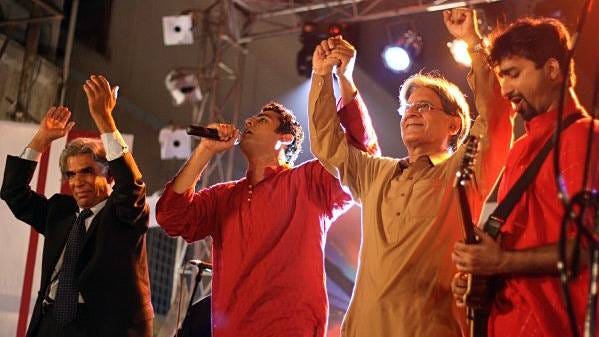
The year 2007 was eventful in Pakistan’s recent history. Political upheaval coupled with a rise in terrorism and a lawyers’ movement for the restoration of the judiciary gripped the country for most of the year. Musharraf, the military dictator, had forcibly removed the Chief Justice of Pakistan — sparking a movement led by lawyers across the country. Amidst all this kerfuffle arose a new band called ‘Laal’ with their song ‘Umeed e Seher’ (Hope for a new Dawn). The song became a sort of anthem for the lawyers’ movement alongside slogans against military dictatorship. The song was based on a poem written by Pakistan’s foremost progressive poet Faiz Ahmed Faiz and the band consisted of young academics who openly declared themselves Marxists. One of the band members was the General Secretary of a Communist Party in Pakistan. A communist party in Pakistan? That seems like an oxymoron, does it not?
Laal performs in Karachi, Pakistan. Lead singer Shahram Azhar and guitarist Taimur Rahman take a curtain call with key leaders of Pakistan’s lawyers’ movement, Ali Ahmed Kurd (left) and Aitzaz Ahsan. (Source: Nighat Chaudhry/for NPR)
Today, the international media has no space for stories that contradict the dominant narrative of Pakistan as a fountainhead of extremism. In order to understand the current trajectory of Pakistan, it is imperative to discover the alternative discourse that existed in the days gone by. While it is an established fact that the All India Muslim League played a pivotal role in the movement that led to the 1947 Partition of India, the contributions of the Communist Party of India are often neglected in this regard. The Communist Party of India (CPI) was established in the third decade of the twentieth century. Initially, the CPI aligned itself with the progressive section within the Indian National Congress consisting of people such as Jawaharlal Nehru, Subhas Bose and Jayprakash Narayan. CPI adopted a ‘United Front’ tactic and sought positions within the structure of Congress. This relationship remained intact till the Second World War (WWII).
In 1942, the All India Congress Committee (AICC) met in Bombay and passed a resolution condemning the British involvement in the war. All communist members of AICC voted against the resolution because the Soviet Union had entered the war by that time. This was a momentary divorce between the two parties and CPI sought other allies in their anti-fascist stance against Germany. By that time, the Muslim League had decided to support the British government’s war effort and proposed the formation of ‘Pakistan’, consisting of the Muslim-majority areas in British India. The British government and the Muslim League were the unlikely ideological partners that the CPI decided to support. In 1942, the CPI held a meeting of its central committee during which G.M. Adhikari presented a resolution indirectly endorsing the idea of ‘Pakistan’. Adhikari viewed Muslim nationalism as a reflection of uneven development of the bourgeoisie amongst the Muslim masses in British India. In an article published in the CPI’s Urdu newspaper Qaumi Jang, Sajjad Zaheer (member of CPI’s central committee) praised the Muslim League faction in Sindh for pursuing progressive politics.
The Muslim League never enjoyed electoral success in the province of Punjab before Partition and the Muslim-majority province voted overwhelmingly in favour of the Unionist Party that ruled the province during the years 1936–1946. Before the 1946 elections, the CPI asked Muslim communists based in Punjab (including Mian Iftikharuddin, Daniyal Latifi and Abdullah Malik) to support the Muslim League in their electoral efforts. There was, however, a reversal in the CPI’s support to the Muslim League in later part of 1946, due to a change in the Soviet attitude towards such ‘liberation’. Sajjad Zaheer then wrote an article criticising the Muslim League’s strong-arm tactics such as the call for ‘Direct Action Day’. During the Partition of India in 1947, the CPI failed to have any significant impact on the larger political stage and the ensuing violence.
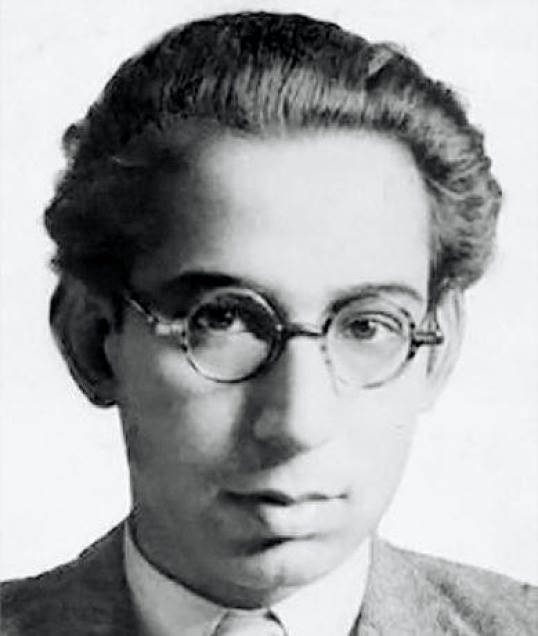
Sajjad Zaheer
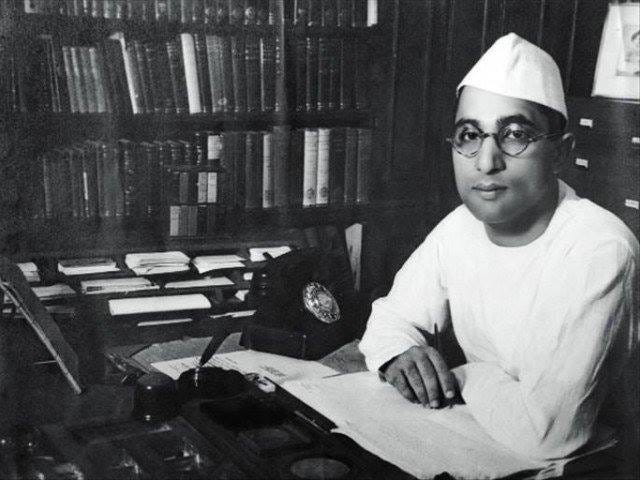
Mian Iftikharuddin
Daniyal Latifi
Abdullah Malik
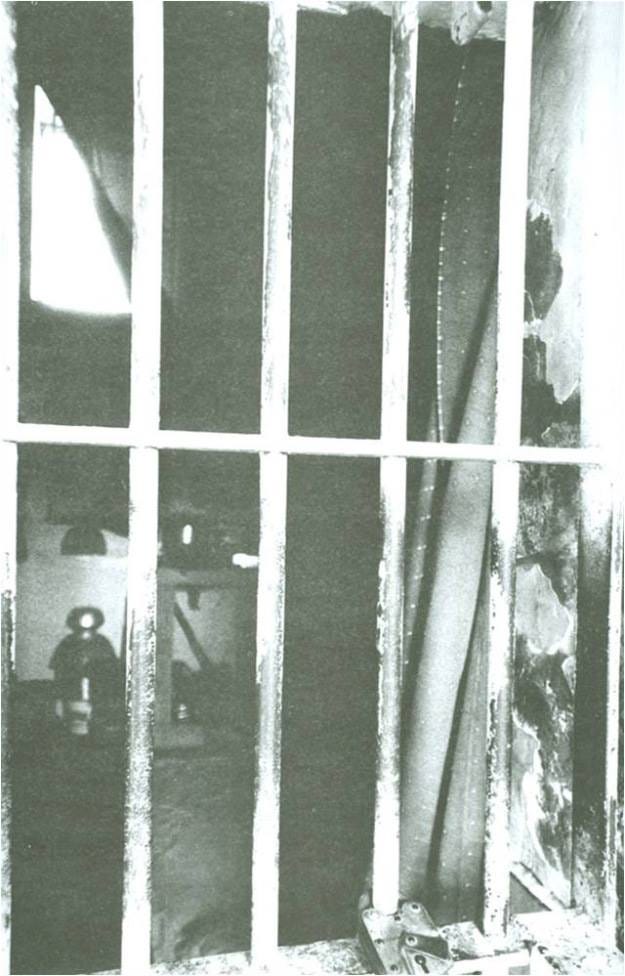
Faiz Ahmad Faiz with jailmate Sajjad Zaheer
Ye daag daag ujaalaa, Ye shab gaziidaa sahar
Wo Intazaar thaa jiskaa, Ye wo sahar to nahi(n)
Ye wo sahar to nahii Jiskii aarazuu le kar
Chale the Yaar kay mil jaaye gi kahi(n) na kahi(n)
(This blood stained light, this dark-stained dawn,
this is not the destiny we were waiting for.
This is not the Destination towards which
we travelled in hope and anticipation.)
Faiz, “Subhe Azadi”, August 1947.
In the year 1932, Urdu’s literary landscape was jolted by the publication of a collection of short stories aptly titled ‘Angaaray’ (Embers). The topics covered in the stories included gender, sexuality, women’s rights and a critique of religion alongside traditional Indian customs. The publication of this book divided the Urdu literati in two camps. On one side were the naturalists or people who favoured “Art for art’s sake” while the other side believed in “Art for humanity’s sake”. The second group, composed mainly of Marxist Indian students and aspiring writers, formed the All India Progressive Writers Association. Their manifesto was first published in February 1935 in Left Review and the Hindi translation in October 1935. From its inception, the movement had a core group of committed communists but its larger membership was not limited by political ideology. Writers and poets focusing on the miseries of the proletariat and mocking the bourgeoisie and ruling classes joined the movement during that period. The movement was not an offshoot of the CPI but worked closely with the communist party.
Sajjad Zaheer was one of the Indian students at Oxford who became a founding member of the Progressive Writers Movement. He described the movement in the following words: “We can only call that literature successful, that knowledge true knowledge, that art real art, which benefits the tree of humanity, which soldiers against capitalist violence and oppression and is a blessing for the working class.”
After the Partition of India, progressive writers who were based in areas that became Pakistan and those who migrated from India formed the All Pakistan Progressive Writers Association. There was no official presence of the CPI in Pakistan but APPWA worked as a cultural representative of left-wing politics in Pakistan. A new manifesto for writers was issued by the CPI which declared that all writers had to take sides in this new battlefield between the people and the ruling elite; neutrality was not an option. In the post-Partition era, debates about the future of Pakistan were going on in political and cultural spheres.To quote Saadia Toor, “one of the most pitched political/ideological battles of the post-independence period was conducted between two literary camps — the left-wing members of Progressive Writers Association and their liberal anti-communist detractors.”
The liberal writers considered themselves first and foremost as patriots who were committed to putting their energies and talents in service of their new nation-state. They defined this project of nation-building as being incompatible with the socialism and anti-imperialism of Progressives. The Progressives went on the offensive and boycotted writers who deviated even slightly from ‘party policy’. This led to them ostracizing luminaries such as Manto and Noon Meem Rashid. These writers were denied any space in the magazines and newspapers controlled by Progressives. In a 1984 interview, Faiz Ahmad Faiz decried the ‘extremism’ that had gripped the PWA in the early post-Partition years. Faiz was never formally a part of the PWA or Communist Party.
Manto wrote a scathing critique of the Progressive Writers Association and its admirers in one of his essays titled “Jayb-e-Kafan”. He wrote, “What kind of progressives are they, when all they advocate is regressive. Why does their ‘redness’ point towards darkness? How can they be friend of the proletariat when they urge working classes to demand their due rights before starting work? I can’t seem to fathom their innovations through which they want to turn the Ghazal into a machine and a machine into Ghazal. I was fed up of their ever increasing manifestos, their lengthy resolutions. Most of their statements arrived from Kremlin through Mumbai and reached McLeod Road (in Lahore). All they care is what this Russian writer wrote or what that Russian intellectual prophesized. I was frustrated on realizing that these people don’t talk about the land we inhabit. If we have stopped producing intellectuals, is becoming a ‘Red’ the only antidote to this malady?”
Wo Baat Saray Fasanay Main Jiska Zikr Na tha
Wo baat unhain bohat Na-gawar guzri hai.
(The issue that was not even mentioned in the story
has bothered them the most).
(Faiz, 1951)
In the second post-Partition CPI congress held in Calcutta, three people represented West Pakistan and 32 people represented East Bengal (later named East Pakistan). After the main congress, the Pakistani delegates convened and held the first meeting of a ‘Communist Party of Pakistan’. Sajjad Zaheer was chosen as the General Secretary. Sajjad Zaheer and two other people migrated to Pakistan to run the day-to-day affairs of the new party. After independence, only 1% of Pakistan’s population was working in industry and among those, only 25% were unionized. Apart from engaging in debates about the future direction of Pakistan via the Progressive Writers, the Communist Party of Pakistan motivated labourers to unionize. By 1950, almost 150 unions had been created in East and West Pakistan. Under the party’s tutelage, a Civil Liberties Union, a Peace Committee, a Women’s Democratic Union and a Democratic Youth League were also formed.
Among students, left-leaning students had formed the Democratic Students Federation (DSF) in Karachi and Rawalpindi. While the party didn’t gain enough mass appeal, it focussed on particular areas to conserve its limited resources. Soon after Partition, Pakistan had sent irregular troops into Kashmir but the mission had been aborted after the Raja acceded to India. An adventurous veteran of the first Kashmir war, Major-General Akbar Khan, talked to some people — including the top brass of the Communist Party of Pakistan — about a possible plan to overthrow the government and attack Kashmir again. This foolhardy plan was unanimously rejected by the Communist Party of Pakistan.
But the matter was not to end there, given the Cold War environment.
Following the Second World War, the world was divided into Capitalist and Communist camps led by the United States and the Soviet Union respectively. After Partition, Pakistan was looking for a benefactor to aid its economy and armed forces. A witch hunt was taking place in the United States against communists in Hollywood and the intelligentsia through the House Un-American Activities Committee and Jospeh McCarthy. In an effort to ingratiate themselves with the Americans, Pakistani authorities (in full know of General Akbar’s plan) arrested the General, some other military officers, the top brass of the Communist Party of Pakistan and Faiz Ahmed Faiz. This case became famous as the ‘Rawalpindi Conspiracy Case’. All of the accused were sent to jail but were released after serving less than their sentence. In 1954, Pakistan finally signed a Mutual Defence Pact with the United States. The Communist Party of Pakistan was officially banned in the following month. The Democratic Students Federation was also banned.
Sajjad Zaheer left Pakistan after getting released from jail in 1955. In the absence of a communist leadership, many political activists from the party formed the National Awami Party (NAP) in the 1950s. Students formerly in the DSF joined a new student organization called the National Students Federation (NSF). NAP consisted of political heavyweights from East and West Pakistan. The party opposed Ayub Khan’s martial law in 1958 and supported opposition candidate Fatima Jinnah in the presidential elections held in 1965. After leaving Ayub’s cabinet in the aftermath of the Taskent Agreement with India and before forming his own party, Zulfikar Ali Bhutto wanted to join NAP. Mr. Bhutto was deterred by the fact that the party was not willing to accept him as a ‘leader’ without first coming through the party’s ranks.
NAP split into pro-Moscow and pro-Beijing factions in 1965. The pro-Beijing faction further split and Major Ishaq alongside Afzal Bangash formed the Mazdoor Kissan Party (MKP) — a party of Maoist leanings that fought against entrenched landlordism in Hashtnagar, which is part of today’s Khyber-Pakhtunkhwa province. Many left-wing ideologues, meanwhile, also joined the Pakistan Peoples Party (PPP) founded by Mr. Bhutto and were a vital part of the party. In the 1970s, Pakistan needed benefactors beyond the United States and Mr. Bhutto started envisioning himself as the leader of the ‘Islamic world’. Left-wing ideologues in the PPP were tortured, jailed and abandoned as a result of this paradigm shift. The Progressive Writers Movement failed to have much impact on the literary scene beyond the initial years and wilted completely during the oppressive Islamisation under Zia’s dictatorship. Women’s rights organizations that started in the 1970s consisted of women with mostly left-wing worldviews. The only mainstream left-wing party working in Pakistan is the Awami Workers Party, a coalition of three leftist parties.The Lawyers’ Movement was hijacked in the later stages by right-wing parties and the Chief Justice was only restored after intervention of the military establishment.
The demise of Pakistan’s left has been blamed on many factors, including but not limited to the lack of an industrial base in the country. A former member of the party joked that when the Communist Party didn’t find industrial workers, they started recruiting railway workers (who were government employees). Another frequent criticism is the lack of adaptability shown towards local conditions and political economy while preaching ‘class war’ to people. Despite all these factors, there is still political space for progressive parties with workable ideas. After all, as Faiz would have reminded us, this stained dawn is not what we were waiting for!
Monday/Pazartesi
Fret not where the road will take you. Do not go with the flow. Be the Flow. Elif
Shafak
I have this weird habit of not planning about things when
abroad. Back home, I plan every single detail possible but as soon as I step
into foreign territory, I am without much planning. In the last three years, I
have visited two countries (US in 2012, Turkey in 2013 and 2014) and I didn’t
plan much in either of those trips. The US trip was pre-arranged by an
organization so the lack of planning was not a problem. The first Turkey visit
was also pre-arranged (or at least its Ankara leg) so there was not much I
could do about it. The second trip to Turkey was my first foreign tour without
a conference/program and I was supposed to be completely on my own. I did get
my hotel booked online and learnt some basic Turkce phrases, but that was it.
My only plan was to spend time in Istanbul and to visit Konya with my friend in
Ankara. The plan to visit Cappadokia was a last-minute impulse buy and I had
not thought it out well. Anyhow, I got the ticket on Sunday evening for a 10 am
bus to Ankara.
Istanbul's Otogar evoked mixed memories in my head. I had
visited the place last year on the very first day that I was in Istanbul. I had
enjoyed a very good ride from there to Ankara. I had endured a disastrous
journey on my way back and had reached the place at 5 a.m. I vowed to make my
experience better than my previous one. On Monday morning, after an early
breakfast, I checked-out of my hotel almost two hours before the time of my
departure.
Using the Karakoy-Bagçilar line and then the Aksaray-Airport
line, I reached Otogar in almost 40 minutes from my hotel in Sultanahmet. I got
out of the central area and failed to locate the "Metro" bus service
centre initially. Then I asked one of the ticket-guys who guided me to the
Other side of Otogar. I had apparently ventured onto the wrong side. Upon
reaching the right spot, I was disappointed to find very few seats in the
station itself. I stopped outside the place and waited to get a vacant
seat.
I got a seat after about 10 minutes and hopped on the
relevant bus at 10 am. It takes almost 1.5 hours for the bus to leave Istanbul
as it stops at different small stations. I had good memories of the last time
that I travelled in the 'Metro' company's bus. The seats were spacious and
there was Wi-Fi throughout the journey. This time, my seat was the same but Wi-Fi
was terrible. I sat along a Turkish guy who slept for most of the
journey. It felt different this time. Maybe I had forgotten it due to my
excitement of last year but the journey was tooo damn long and the seat wasn’t
as comfortable as I expected it.
I tried listening to a football-themed podcast that I like.
Then I started Elif Shafak's book, which I felt was quite interesting. There
was a little girl sitting across the aisle from me who was very active and
naughty and smiled back whenever I smiled at her.
As we approached the city of Ankara, my friend called and
asked about my whereabouts. He and I used to be roommates in a boarding school
when we were in the 7th grade. Since then, I had graduated from
medical school while he had acquired a bachelor’s degree from an Agriculture
University. He was pursuing a Masters Degree in Soil Sciences from Ankara
University and had been living in Turkey for the last 8 months, learning the
language. He could speak Turkce fluently and had helped me learn the basics.
Upon reaching the Ankara Otogar, I waited for him to arrive. Meanwhile, I
wanted to get some dollars changed but there was apparently no Doviz at the
station. I didn’t know what a money-changer was called in Turkce so I decided
to ask the lady present at “Information Center” of Otogar. She probably didn’t
understand English and thus pointed me in the wrong direction. I later found
out that there was NO Doviz at the station. My friend arrived and we took the
tram to Ulus from where we rode a bus to Atakule(Ataturk Tower). I was amazed
to know that Cinnah Cadessi was named after the founder of Pakistan, Mohammad
Ali Jinnah/Cinnah. We moved to a flat near Cankaya Cadessi, the road which
evoked beautiful memories from the previous year.
I have been to capitals of three countries, Pakistan, Turkey and United States.
While all of them are wonderfully planned, they share that one trait which is
universal to capitals: They are really boring places to be. Islamabad, Pakistan’s
capital, is known as ‘Islamabad the beautiful’ and it indeed is very lovely(If
straight roads and greenery is your thing). It is also incredibly boring.
Washington DC at least has some good museums to while away one’s time. Ankara
had none of these. No greenery, not much natural beauty and no wonderful
museums either.
My friend had arranged for us to live at a Pakistani diplomat’s flat in a
residential neighborhood. On our way to the apartment, we stopped to buy some
shopping at a grocery store where we got some vegetables and bread(Ekmek) for
dinner. I was surprised to find the way people got their vegetables. In
Pakistan, when you go to buy vegetables/fruits, you ask for a particular item
and the shopkeeper provides you with that item in the required quantity. In Turkey,
there are no shopkeepers to put the items in your basket, there are disposable
shopping bags. You can choose the vegetables you want and weigh them at the
store, paying for them at a separate counter. This way, you can choose the
vegetables of your choice(size, shape etc) and it is not left to the whims of
the shopkeeper.
It was during that walk that I discovered “Bim” stores. They are like utility
stores where one can buy items of daily use in bulk form, at subsidized prices.
I was incredibly tired upon reaching the apartment so I unpacked hurriedly and
called home to inform them of my arrival in the city. My friend had to visit
his dorm so he left me in peace. After the necessary updates on Facebook and
browsing through twitter, I sat down with the young Pakistani diplomat. He had
been stationed in Ankara to learn Turkce and was being posted to Istanbul in a
few days. We talked about my interest in International relations and he told me
about the workings of Pakistan’s Foreign Service. We sat down for dinner and he
told me about the Turkish claim of having the most diverse cuisine in the
world(and how it was not exactly true). He also told me of the special kind of
Ekmek(a bulky one) that was available only during the month of Ramadan. My
friend arrived from his dorm and we talked about the plans for next two days.
We had to go to konya and we had a spare day. I had already seen Ankara’s main
attractions(Ataturk’s musoleum,Cankaya Cadessi, remains of old city) so there
were few options left. I was also supposed to see a Turkish friend of mine whom
I had met last year.
Contrary to popular belief in Pakistan, the USSR (Union of Soviet
Socialist Republics) was not brought to its knees by Afghan Mujahideen
supported by our boys. Mikhail Gorbachev’s policies of Glasnost (meaning
‘openness’) and perestroika (restructuring) and his reorientation of
Soviet strategic aims led to the dissolution of the Soviet Union. The
Last Soviet Soldier left Afghanistan in 1989, while Estonia had declared
Independence from the Soviet Union in November 1988 and a pro-communist
government was incharge in Kabul till 1992. The Berlin wall was not
brought down by Afghan and Arab ‘Mujahideen’. Considering these
essential facts, the fallacy of “destroying a superpower” seems shallow
as a puddle. Following the breakup of the Soviet Union, Armenia,
Azerbaijan, Belarus, Estonia, Georgia, Kazakhstan, Kyrgyzstan, Latvia,
Lithuania, Moldova, Russia, Tajikistan, Turkmenistan, Ukraine and
Uzbekistan emerged as Independent states.
Ukraine is the largest
country within Europe according to area and the sixth largest European
country by population. Census data from 2001 revealed that 78% of people
living in the country were Ukrainians in ethnicity while 18% were
ethnically Russian. Till 2004, Ukraine was a semi-presidential republic.
In 2004, Viktor Yanukovych, the incumbent Prime Minister, was declared
winner of the presidential elections, while the Supreme Court ruled the
election to be rigged. The massive rigging caused a national outcry in
support of opposition candidate Victor Yushchenko. It led to the “Orange
Revolution” which resulted in a re-vote ordered by Ukraine’s Supreme
Court, resulting in victory for Yushchenko. He remained President till
2010, when Viktor Yanukovych was elected President after the elections.
During the ‘Orange Revolution’, Yanukovych was supported by Russia.
In
November 2013, protests broke out in the country after President
Yanukovych’s government rejected a far-reaching accord with the European
Union, in favor of stronger ties with Russia. Thousands of people
thronged into Central Kiev for peaceful protests. They occupied
Independence Square, known as ‘Maidan’. The anger was fuelled by
perceptions of political corruption and alleged links between the
government and super-rich oligarchies. Police launched a brutal raid on
student protestors, images of which spurred more people to join the
protests. In January 2014, the Ukrainian parliament passed anti-protest
laws which were later repealed. On 22nd January, two protestors died
after clashes with the police. Protestors seized government buildings
the following day in western Ukrainian cities. Prime Minister Mykola
Azarov resigned on 28th January. The next month, violent clashes erupted
in Kiev while the Speaker of Parliament refused to initiate debate on
changing the Constitution. More than 77 people were killed and hundreds
wounded due to a stand-off in Kiev.
President Yanukovych fled to
southern Russia and the Ukrainian Parliament voted to remove him from
his post. A national election followed in May, leading to the victory of
Petro Poroshenko, a pro-European candidate. Mr. Poroshenko was known as
the ‘Chocolate King’ as he owned the Roshen confectionary group. He was
one of the leaders of the 2004 Orange Revolution and participated in
the ‘Maidan’ movement in Kiev. It is worth consideration that the
protests against President Yanukovych were strongest in the Kiev area
and Western Ukraine, where there is a greater affinity with Europe,
rather than in the Russian-speaking East and South. Ukrainians in the
East, working in heavy industry that supplies Russian markets, were
fearful of losing their jobs if Ukraine moved closer to the European
Union. Collapse of Government authority during the last few days of
February 2014, led to a secession crisis in Ukraine’s Crimean Peninsula
which has a significant ethnic Russian population. Following the
Russo-Turkish War of 1768-1774, Crimea had been annexed by the Russian
Empire. Armed Russian soldiers began moving into Crimea on 28th
February, 2014.
The ‘Maidan’ protestors had ‘started the fire’ by
taking over government buildings and establishing ‘local authorities’.
“After Yanukovych’s removal, it became the turn of the opponents of the
Maidan,” Nicolai N. Petro, wrote in a magazine called, ‘The National
Interest.’ Local representatives from the East and South convened in
Kharkov and assumed all political authority until “legitimate political
authority” in Kiev was restored. The Crimean delegation took the lead,
seeing an opportunity to restore the autonomy that Kiev had largely
taken away from them in 1998. But when the interim government in Kiev
told them they could not hold a referendum on autonomy within Ukraine,
and tried to replace those in charge of local security forces, the
Crimean parliament declared independence and changed the wording of the
referendum—altering the language from “staying within Ukraine” to
“joining Russia.” The Donbass followed a similar scenario. In March,
local authorities in Lugansk asked Kiev to ensure the rights of Russian
speakers and disarm its militias. When the interim government ignored
these requests, those most impatient and distrustful of Kiev occupied
government buildings in Donetsk, Lugansk and Kharkov, and organized a
referendum for creating local republics that stopped short of asking to
join Russia. In many areas in the region, a majority of those who voted
were overwhelmingly in favor of regional sovereignty.
Faced with the
problems of stabilizing the economy and keeping the country together,
President Poroshenko has tried to steady the ship since assuming power.
He signed the European Trade Association Agreement, which was the bone
of contention for the previous regime. Experts believe that this
agreement would benefit the Western and Central parts of Ukraine but
workers in Eastern Ukraine will suffer because the country’s free trade
access with Russia will be revoked. In his inaugural address, Mr.
Poroshenko affirmed that the Ukrainian language will continue to remain
the national language (despite the fact that 83 percent of journals, 87
percent of books, and 44 percent of television programs in Ukraine are
solely in Russian, compared to 28 percent solely in Ukrainian) and that
aspirations towards regional autonomy would not be tolerated by Kiev.
Russian
President Vladimir Putin has overtly supported the rights of Russian
speakers in Ukraine and it is feared, rightfully so, that the current
fiasco can lead to the breakup of the country along ethnic and
linguistic lines.
On 20th January, 1972, Chief Martial Law Administrator and President of
Pakistan—Mr. Zulfiqar Ali Bhutto—called a meeting of the country’s most
eminent scientists in Multan. Pakistan had faced the ignominy of a
terrible defeat at the hands of the Indian army a few months ago. Mr.
Bhutto asked the scientists to start working on the assembly of a
nuclear bomb. While the experienced heads declined to commit to this
venture, younger scientists unanimously responded that it could be done
in five years. Mr. Bhutto was satisfied by the response and left for a
tour of Islamic countries soon afterwards.
In July 1974, a letter
arrived at the Prime Minister’s secretariat (Mr. Bhutto had assumed the
office of Prime Minister after passage of a new constitution in 1973)
from the Netherlands. The correspondent claimed to be a physicist
working for a European nuclear consortium. He claimed to have obtained
blueprints for a revolutionary new process involved in building a
nuclear bomb. The person, let’s call him AK, was working as a technical
translator for the multinational URENCO consortium. In his letter, he
claimed ‘writing innumerable research papers and an internationally
renowned book.’ Son of migrants from the Indian state of Bhopal, AK had
been living in Europe for 13 years and was passionate about ‘debates
about the Hindus over the border, who had ransacked his old home in
1947.’ Mr. Bhutto tasked an Intelligence Agency to investigate the
whereabouts of this mysterious scientist named AK. It was found that he
had worked as Inspector of Weights and Measures for the Karachi post
office in the 1960s, after obtaining a science degree from Karachi
University. He left for West Germany for further studies and received an
offer to attend a series of introductory lectures in Metallurgy in
September 1962, by West Berlin Technical University. He moved, with his
newly wed wife, to Holland in 1963 and continued his education at Delft
Technological University. In his spare time, he used to write letters to
European Newspapers and magazines that he felt had misrepresented
Pakistan.
Mr. Bhutto was satisfied by AK’s track record and invited
him to start the process of assembling a nuclear bomb for Pakistan. He
was provided a laboratory to run, and unlimited funding as well as
official patronage. After smuggling different parts required for
building the bomb from a plethora of countries, and through not-so-legal
channels, AK succeeded in completing the crucial step in manufacturing a
nuclear bomb. The rest of the hard work was done by the Pakistan Atomic
Energy Commission (PAEC), an organization that AK hated with a
vengeance.
By this time, AK had developed an acute case of
megalomania. AK’s psychiatrist at that time, Professor Haroon Ahmed
mentioned in his reports that by this time, ‘he was suffering from
depression, and was classically manic.’ He used to boast, “Jinnah built
Pakistan, but I saved it.” AK even had an intelligence team follow his
Dutch wife and daughters because he thought they were more loyal to
Europe than they were to Pakistan. In 1984, he called a reporter at a
local Urdu digest and asked him to send him a list of questions for an
interview. He was so disappointed with the list that he threw it away
and drafted his own set of questions. He asked himself: “What do you
think was your greatest achievement?” and “Did the government recognize
your contribution?” In February 1984, he called Nawai Waqt and used the
same formula. He used to give charity to mosques and schools, all of
which had to bear his name as ‘testimony to his greatness.’ In 1986, he
invited a journalist from a small-circulation weekly digest called
Hurmat to interview him at his laboratory. It resulted in a series of
articles and a biography full of accolades for Mr. AK. One of the
articles echoed AK’s inner thoughts: “In order to overcome the energy
crisis in Pakistan, the Pakistan Atomic Energy Commission should be
overhauled and its leadership should be handed over to this Mard-e-Momin
of Iqbal”.
After Pakistan’s requirements for nuclear materials were
fulfilled, AK started selling different parts as surplus to the highest
bidder. He first chose Dubai and later Timbuktu as his operational base
for nuclear proliferation. The Afghan War prevented the United States
from clamping down on his activities, but the noose started tightening
in the 90’s. His footprints were all over the nuclear proliferation
racket around the world, from Libya to Iran to North Korea, earning him
the nickname “Typhoid Mary of Nuclear Proliferation.” In 2001, Musharraf
was forced by the International community to get rid of AK and his
crime syndicate, after two of AK’s ex-colleagues were found to have
travelled to Afghanistan to meet Osama bin Laden (OBL) there.
Intelligence sources in India and the US allege that AK co-owned
Al-Shifa chemical factory in Sudan with OBL, and OBL had financed the
construction of the Hendrina Khan Hotel in Timbuktu. In 2004, AK
apologized to the nation in a televised address for his “errors of
judgment related to unauthorized proliferation activities.” Musharraf
noted in his memoir, “The truth is that he was just a metallurgist,
responsible for only one link in the complex chain of nuclear
development. But he had managed to build himself up into Albert Einstein
and Robert Oppenheimer rolled into one”.
The arrogant “Father of the
Bomb” started writing elementary school-style essays for a national
newspaper a few years ago, continuing his crusade against common sense
and reason. He has made hundreds of factual errors in his “columns” over
the years along with an attempted whitewash of history. His most recent
diatribes have been directed against chairman of PAEC Munir Ahmed Khan
and Dr. Abdus Salam, Pakistan’s only nobel laureate. AK has accused them
of selling Pakistan’s nuclear secrets while comfortably ignoring his
own efforts to sell the same secrets to the highest bidder.Without the
efforts of these gentlemen, technicians such as AK would have failed.
Perhaps people living in stone houses should avoid throwing stones at
others.